Quasars, Black Holes & Galaxies talk Nov. 20

Dr. Marsha Wolf, UW-Madison Astronomy Dept. research scientist, will talk about “Quasars, Black Holes and Galaxies: Which Came First?” (UWW Physics Dept.’s 4th Fall 2009 Whitewater Observatory Public Lecture) on Fri., Nov. 20, 8pm, 141 Upham Hall. Public viewing at the Whitewater Observatory will follow, weather permitting. Also enjoy Upham’s lobby exhibit, “From Earth to the Universe.”

ABSTRACT:  As a result of research using telescopes such as the Hubble Space Telescope, we know that most galaxies contain a supermassive black hole whose mass is nearly a constant fraction of its galaxy’s mass. Quasars are supermassive black holes (SBHs) consuming matter at a prodigious rate and giving off light & radio waves in proportion to the matter consumed. Most SBHs in nearby galaxies are not quasars, and quasars as a group are quite distant — implying that a SBH’s quasar phase happens early in its galaxy’s life. Some scientists theorize that SBHs, while growing in their quasar phase, control the rate of growth in mass of their galaxies. If true, which came first: the galaxy feeding the SBH, or the supermassive black hole controlling the growth of the host galaxy?
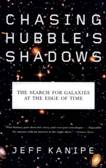
Chasing Hubbles Shadow coverRelated materials are available in Andersen Library! For example, a search of the HALCat library catalog would find titles such as Chasing Hubble’s Shadows (3rd-floor Main Collection, QB500.262 .K36 2006) and Bright galaxies, dark matters (3rd-floor Main Collection, QB857 .R83 1997). Searching the Library’s article databases, such as the Institute of Physics electronic journals, would find articles such as “Co-Evolution of Supermassive Black Hole and Host Galaxy From z ~ 1 TO z = 0” (The Astrophysical Journal, vol. 696, pp. 1051-1062, doi: 10.1088/0004-637X/696/1/1051).

The European Space Agency’s web pages devoted to the Hubble Space Telescope include the page “Black holes, quasars, and active galaxies.” You also can learn more about the Hubble Space Telescope and its accomplishments and images from NASA’s web site.

Please ask a librarian for assistance with finding materials.

Government Printing Office logo

The University Library is a federal depository with many federal, state, local, and international documents on a variety of current and relevant issues available to you in print, microfiche, CD-ROM, and electronically. Come check out your government at the University Library!
Posted in around the world, campus connection, info.gov | Tagged , , , , , , , , , , , , , , | Comments Off on Quasars, Black Holes & Galaxies talk Nov. 20

New Stuff Tuesday – November 17

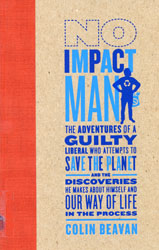
No Impact Man

No Impact Man:
The Adventures of a Guilty Liberal Who Attempts to Save the Planet and the Discoveries He Makes About Himself and Our Way of Life in the Process
by Colin Beaven
HD62.27 .S64 2009
New Book Island, 2nd floor

Can you imagine a year without take-out food (I would flat out die from starvation), driving (I don’t really need a job) or Tide in your laundry (smelling nice is overrated)? Well, Beaven, author and electronic engineer, not only puts himself to the test of zero environmental impact, but also his family. Surprisingly, they all made it out alive and were able to write about their experiences. The author describes the trials and tribulations of the modern conveniences, such as air conditioning and toilet paper (you’ll have to read it to find out about that side of things). If you can’t get enough of him, you can check out his No Impact Project.

(The real reason that I chose to feature this book is because of its appearance and construction. The publishers printed the book on 100% postconsumer recycled paper and utilized unbleached cardboard covers. It definitely catches your eye on the shelf.)

Posted in new stuff tuesdays | Tagged , , , , | Comments Off on New Stuff Tuesday – November 17

The Future of Magazines

I’m a magazine reader… or at least I have more magazine subscriptions than the number of books that I’ve read this year (it’s not a very high number). The pages are glossy, the ads are – for the most part – less annoying than pop-up windows and the articles are short enough to keep my attention.

However, the sheer volume of magazines out there can make it very difficult to keep up with all of the reading (I’m extremely behind on my GQ and Men’s Health issues). Furthermore, there’s a lot of filler that, while entertaining, gets in the way of getting to the in-depth articles on a range of current topics.

Enter Maggwire. The site provides access to articles online on everything from business news to healthy eating from some of the top popular publications, such as Vanity Fair, Esquire and Consumer Reports. But unlike other content aggregators, the site will even recommend reading for you based on your preferences. Their premium service, out in the near future, will allow you to purchase subscribers-only content directly through them.

So, combine Pandora with magazine content and you’ve got Maggwire. Take a look.

Thanks to Sharon for the link!

Posted in around the world | Comments Off on The Future of Magazines

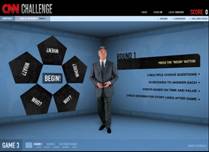
Play the CNN Challenge

Do you keep up with news from around the country and the world, or is your head stuck in the Whitewater sand? There’s a lot going on! Take the CNN Challenge and see what you know. Some questions test knowledge of old news (aka history).
CNN Challenge screenshot

Feeling like you need to learn more? There are daily newspapers to read in Andersen Library (see 2nd-floor newspaper rack for current issues), web sites of news organizations, and of course, news on radio and TV. For older topics, Andersen Library has books, videos and government publications that can be found by searching the HALCat library catalog, and articles in newspapers and magazines can be found by searching article databases such as the ProQuest Historical Newspapers: The New York Times (1851-2006).

Please ask a librarian for assistance with finding materials.

Posted in around the world | Tagged , , , , , , , , | 3 Comments

Researching dialects?

Where can you find scholarly/peer-reviewed articles on dialects?

Try these article databases:

Posted in tips for research | Tagged , , | Comments Off on Researching dialects?

New Stuff Tuesday – November 10

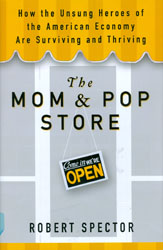
The Mom & Pop Store

The Mom & Pop Store:
How the Unsung Heroes of the American
Economy Are Surviving & Thriving
By Robert Spector
HD62.27 .S64 2009
New Book Island, 2nd floor

The economic turbulence that our country is facing has put pressure on every corner of society, from the large corporations to the municipalities to the small businesses. Over the last several years, there has been a push to shop local, with organizations marketing to their fellow neighbors about the virtues of supporting communities. This week’s featured title puts the heart of the local economy in the spotlight in these difficult times.

Spector, business journalist and bestselling author, travels down America’s Main Streets to take the pulse of the nation’s economy and (surprisingly) finds it alive and beating quickly. The author provides snapshots of small business and localism movement around the country, from a bookstore on the West Coast to a deli on the East Coast and everywhere in between. While the present day is the main theme of the work, Spector brings in the history of independent merchants and their economic contributions to the growth of the colonial era. He also integrates his own stories of growing up with the family business.

Posted in new stuff tuesdays | Tagged , , , , , , , | Comments Off on New Stuff Tuesday – November 10

Coral Reef & Ocean Educational Materials

Teachers, student teachers, and others with the desire & opportunity to educate youth groups: The National Oceanic and Atmospheric Administration (NOAA) has issued two discs of resources for educators on coral reefs and and other ocean topics. Both contain lesson plans, videos, posters, and more:

Screenshot from Living Reef movie Contents of the 2008 NOAA Coral Reef Educational Resources CD are described online, with links to play videos and the coral reef song (yup, a theme song for the International Year of the Reef 2008) online. (My personal favorite is “The Living Reef” video.) See the NOAA Coral Reef Conservation Program web page “Resources for Educators” for more K-12 material. You also can visit the Marine Photobank to see images in its “Coral Degradation and Potential Solutions” photo gallery.

Orphan Orca movie screenshotThe 2009 Year of Science: NOAA Education Sampler DVD includes materials about oceans, coasts, atmosphere, and climate science. Resources provided include movies & animations, facts sheets & data sets, story books, activities & lesson plans, and podcasts for use with grades 3-12. I found the “Arctic Sea Ice Changes” animation sobering, and on a lighter note, I was a sap for the “Orphan Orca: Saving Springer” movie (Who doesn’t love a happy ending, and it’s a true story too!).

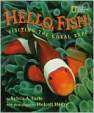
Hello Fish coverBoth discs are available from the federal depository collection of CDs & DVDs (ask at the Reference Desk), if you prefer that to using the links from the web pages. Additional related materials are available in Andersen Library. For example, search the HALCat Library catalog for “coral reef?” and limit to the Curriculum Collection to find juvenile titles such as Hello fish! Visiting the coral reef (2nd-floor Curriculum Collection, Oversize Juvenile Nonfiction, 597 Ear).

Please ask a librarian for assistance with finding materials.

Government Printing Office logo

The University Library is a federal depository with many federal, state, local, and international documents on a variety of current and relevant issues available to you in print, microfiche, CD-ROM, and electronically. Come check out your government at the University Library!
Posted in around the world, info.gov | Tagged , , , , , , , , , , | Comments Off on Coral Reef & Ocean Educational Materials

Galileo lecture Fri., Nov. 6

Dr. Paul Rybski, UWW Dept. of Physics, will talk about “Galileo’s Hits, His Misses and Why” (3rd fall 2009 Observatory Public Lecture) on Fri., Nov. 6, at 8pm in Upham Hall room 141. A public viewing session at Whitewater Observatory will follow at 9:15 pm, weather permitting.

LECTURE ABSTRACT:  In October 1609, Galileo Galilei began observing astronomical objects. Over the next several years he carefully recorded observations of the Moon, Mercury, Venus, Mars, Jupiter, Saturn, the Milky Way and the Sun. In so doing, he laid the groundwork for the eventual acceptance  of a Sun-centered solar system. This lecture will cover what observations Galileo attempted, what he found in them and what he missed, either accidentally or because he felt he did not have sufficient evidence to announce a discovery.

Galileo Courtier book coverAndersen Library has materials on Galileo if you are interested in learning more about him. Search HALCat, the Library catalog, to find titles such as Galileo, courtier: The practice of science in the culture of absolutism (3rd-floor Main Collection, QB36.G2 B54 1993).

Please ask a librarian for assistance with finding materials.

Posted in campus connection | Tagged , , , | Comments Off on Galileo lecture Fri., Nov. 6

New Stuff Tuesday – November 3

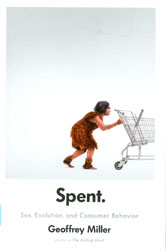
Spent

Spent:
Sex, Evolution and Consumer Behavior
By Geoffrey Miller
HB801 .M493 2009
New Book Island, 2nd floor

It seems that we’re on a Darwin kick here (next week, a book about the Darwin Awards?), but this week’s featured title also deals with evolution in a different context. Besides, with the Black Friday ads already starting to pop up here and there, dropping loads of cash is on everyone’s mind.

Miller, a professor at the University of New Mexico, applies the world of evolutionary psychology to the field of marketing with intriguing results. He seeks to prove that there is a connection between buyer behavior and our biological potential as friends and mates. The author examines the Central Six, the major dimensions of variations for human behavior, and what the purchases we make, from cars to music to video games, reveal about them. If you’d like to learn what compels you to buy those suicidal high heels or the ginormous truck, this book’s for you.

Posted in new stuff tuesdays | Tagged , , , , | Comments Off on New Stuff Tuesday – November 3

Soldiers’, children’s accounts of war

UWW will honor Veterans Recognition Week (Nov. 3-11, 2009) with several events.

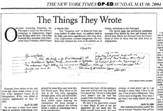
New York Times image of Things They Wrote OP-EDLetters Home” on Tues., Nov. 3rd, at 7:30pm (Young Auditorium) is a performance of stories of soldiers in Iraq and Afghanistan and their families. It’s inspired by The New York Times articles, The Things They Wrote.

Mon., Nov. 9, 6-8 pm: Student panel on UWW Veterans’ Firsthand Accounts (location: Involvement Center, University Center).

Wed., Nov. 11, 5 pm: Guest speaker Ben Collins shares his experience as a Green Beret in Afghanistan (location: Summers Auditorium, University Center).

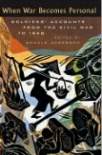
When War Becomes Personal coverThere are also materials in Andersen Library. A search of HALCat, Andersen Library’s catalog, would find titles such as When war becomes personal: Soldiers’ accounts from the Civil War to Iraq (3rd-floor Main Collection, E181 .W565 2008) and Stolen voices: Young people’s war diaries, from World War I to Iraq (2nd-floor Curriculum Collection, Juvenile Non-Fiction, 302.23 Sto).

Please ask a librarian for assistance with finding materials.

Posted in campus connection | Tagged , , , , , , , , , | Comments Off on Soldiers’, children’s accounts of war