
In April 1846 the Donner and Reed families left Springfield IL for California. They split off from a larger wagon train to follow a so-called shortcut, but that and other difficulties cost them valuable time. When they finally reached the Sierra Nevada Mountains at the end of October they were trapped on the eastern side by heavy snows and food supplies were quickly depleted. A small group set out to get help, but along the way some died and were cannibalized. Seven of this group reached safety on the western side of the mountains in mid-January 1847. Californian relief parties sent to rescue the rest of the Donner Party found that some of the survivors had begun to eat their dead too. The last survivor of the Donner Party arrived at Sutter’s Fort on April 29, 1847. Of the original 87 pioneers, 39 died.

 Interested in this bit of history? Search the Library Catalog to find titles such as Ordeal by hunger; the story of the Donner Party (3rd-fl. Main Collection, F868 .N5S7x 1960), Unfortunate emigrants: narratives of the Donner Party (NetLibrary ebook), and Wagons west: the epic story of America’s overland trails (3rd-floor Main Collection, F593 .M475 2002).
Online resources include the brochure of the Donner Memorial State Park and a couple of digitized diaries of Donner Party members:
- Patrick Breen’s diary for Nov. 20, 1846-Mar. 1, 1847 is part of the Online Archive of California.
- Eliza Poor Donner Houghton’s diary is part of the “American Memory” project at the Library of Congress.
 Pitts goes on to suggest additional reading, all of which are titles available in the Library’s 3rd-floor Main Collection:
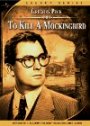 Andersen Library has the Oscar and Golden Globe-winning
 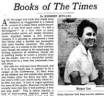 More information about author
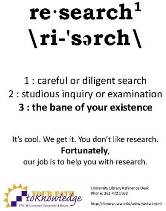 The reference librarians are available to meet with individuals or small groups who need help! Contact us to make an appointment and you’ll be matched up with the librarian who knows most about the subject area, e.g., Kyle Naff (liaison to the College of Business & Economics) would meet with business students, Sue Coenen (liaison to the College of Education) would meet with education students.


 This research is explained and reported in the article: