Millennial Muddle

Just like any other business, the higher education market finds it useful to segment their customers into various groups. Every generation of students has its defining characteristics and corresponding labels. Getting a handle on their core characteristics is good business — whether for faculty in gearing their coursework to their students’ workstyles or for businesses in peddling their products.

This week, The Chronicle of Higher Education looks a little closer into this practice in “The Millennial Muddle: How Stereotyping Students Became an Industry.” But is there really anything new about the millennial generation (people born between 1982 and 2004) — or about trying to label and characterize a generation of students?

If you’re interested in learning more about the millennials, take a look at these books.

Educating the net generation: how to engage students in the 21st century, by Bob Pletka. Main Collection, 3rd Floor, LA227.4 .P58 2007.

Not everyone gets a trophy : how to manage Generation Y, by Bruce Tulgan. Main Collection, 3rd Floor, HF5549.2.U5 T854 2009.

Trophy kids grow up: How the millennial generation is shaking up the workplace, by Ron Alsop. Main Collection, 3rd Floor, HD6270 .A44 2008.
Posted in around the world, online @ the library | Tagged , , , | Comments Off on Millennial Muddle

“How to Be Mexican” lecture 10/12

What does it mean to be a Mexican today? Alma Guillermoprieto, award–winning journalist born in Mexico, will speak on “How to Be Mexican” on Mon., Oct. 12, at 7 pm in Young Auditorium. This is the first 2009/2010 Contemporary Issues lecture.

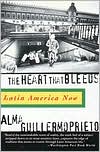
“Alma Guillermoprieto is considered an authority on the cultural and political life of Mexico and South America, especially as they relate to the United States. For the last thirty years, she has traced the history of Latin America incorporating her personal experiences.” She was awarded a MacArthur Fellowship, won the George Polk Award for Foreign Reporting in 2000, and she is a Foreign Honorary Member of the American Academy of Arts and Sciences.

Heart that Bleeds coverThree of her books are available in Andersen Library:
If Andersen Library’s copies are checked out, UWW students and staff may borrow titles from other UW libraries by using the free Universal Borrowing service. Requested titles arrive in 2-4 weekdays.

Alma Guillermoprieto also writes frequently for publications such as the New Yorker and National Geographic. Search article databases such as Academic Search Complete (EBSCOhost) for au Guillermoprieto to find her articles, including “Days of the dead” (New Yorker, 11/10/2008, pp. 44-51) on the violence of the illegal drug trade in Mexico and its social repercussions.

Please ask a librarian for assistance with finding materials.

Posted in campus connection | Tagged , , , , , | Comments Off on “How to Be Mexican” lecture 10/12

Library @Employee Benefit Fair

Check out Andersen Library’s table at the Employee Benefits Fair (Thursday, Oct. 8, 10am-2pm, UC Hamilton Center) to see what we’ve got for staff! Betcha didn’t know about…movies, children’s books, Kindles, Flip video cameras, graphic novels, and more. See you there.

Photo of Willie at Browsing Books

Posted in around the library, campus connection | Tagged | Comments Off on Library @Employee Benefit Fair

Autism

Earlier this week two government studies indicating increasing prevalence of autism spectrum disorder in children in the U.S. were in the news, including “Autism is more widespread, U.S. studies show, but why?” in USA Today.

The first study, “Prevalence of parent-reported diagnosis of autism spectrum disorder among children in the US, 2007,” was published online by Pediatrics, the official journal of the American Academy of Pediatrics, on Oct. 5.

In response, the Centers for Disease Control issued a statement that similar findings will appear in a report from CDC’s Autism and Developmental Disabilities Monitoring (ADDM) Network later in the year, and “these data affirm that a concerted and substantial national response is warranted.” CDC recommended the Interagency Autism Coordinating Committee (IACC) web site for more information, such as its “Summary of advances in autism spectrum disoder research: Calendar year 2008.”

Students With Autism coverIn addition, Andersen Library has materials on autism. Search HALCat (Andersen Library’s catalog) to find books titles such as Healing and preventing autism: A complete guide (2nd-floor Browsing Books, RJ506.A9 M4252 2009), Autism spectrum disorders: Psychological theory and research (3rd-floor Main Collection, RC553.A88 B694 2007), and Students with autism spectrum disorders: Effective instructional practices (3rd-floor Main Collection, RJ506.A9 H42 2007). Journal of Autism and Developmental Disorders coverSearch article databases to find articles such as “Trends in autism spectrum disorder diagnoses: 1994–2007” (Journal of Autism & Developmental Disorders, Aug. 2009, v.39, no.8, pp. 1099-1111) and “Timing of identification among children with an autism spectrum disorder: Findings from a population-based surveillance study” (Journal of the American Academy of Child & Adolescent Psychiatry, May 2009, v.48, no.5, pp. 474-483).
Please ask a librarian for assistance with finding materials.

Government Printing Office logo

The University Library is a federal depository with many federal, state, local, and international documents on a variety of current and relevant issues available to you in print, microfiche, CD-ROM, and electronically. Come check out your government at the University Library!

Posted in around the world, info.gov | Tagged , , , , , , | Comments Off on Autism

New Stuff Tuesday – October 6

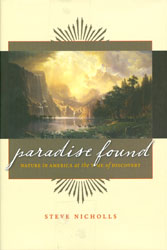
Paradise Found

Paradise Found:
Nature in American at the Time of Discovery
By Steve Nicholls
QH102 .N53 2009
New Book Island, 2nd floor

How has your hometown changed over the last ten years? Your lifetime? Ever wonder what your hometown looked like before anyone actually lived there? This week’s featured title take a look at our continent and its natural history around the time that Columbus sailed the ocean blue.

Nicholls, known for his work as a wildlife filmmaker, takes the reader on a journey through North America – before the first settlers left their lasting marks. The Europeans that made the voyage across the ocean were met with untouched natural beauty, leaving behind detailed notes of the flora and fauna that they encountered. The author uses his vast knowledge of natural history and experience from directing and writing documentaries to bring the picturesque beauty of the landscape to life. He utilizes the firsthand accounts from the past and scientific research being done today to create portraits of each of the regions of the continent.

Posted in new stuff tuesdays | Tagged , , , , | Comments Off on New Stuff Tuesday – October 6

Nat’l Alcohol Awareness Week @UWW

UWW will observe National Alcohol Awareness Week with several events:

  • Mon., Oct. 5, 6:45 pm: The “Day of Dialogue” program will include stories from students, faculty & staff about alcohol and other drug experiences. Thomas Farley, brother of the late comedian Chris Farley, will speak at 7 pm about his brother’s struggles with addiction. (Hamilton Center, James R. Connor University Center)
  • Tues., Oct. 6, 6:30 pm: Former UW-Whitewater prof. Dan Sable’s video presentation will chronicle his wife’s battle with alcoholism. Sable lost both his wife and son to alcohol-related circumstances. (Room 1303, Hyland Hall)
  • Wed., Oct. 7, 8 pm: Party without drinking–root beer pong, simulated sobriety testing through UW-Whitewater Police Services, a pouring station to illustrate the amount of alcohol in one serving, and musical guest De La Buena. (Down Under, James R. Connor University Center)

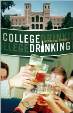
College Drinking book coverInterested in research about alcoholism? Andersen Library has materials. Searching HALCat (Andersen Library’s catalog) could find titles on various aspects of alcohol and alcoholism, such as College drinking: reframing a social problem (3rd-floor Main Collection, HV5135 .D69 2009) which explores why students binge drink, what are links to campus crime and sexual assault, and what are effective prevention programs and countermeasures. Another title that could be found is Secondary effects of heavy drinking on campus, an online government publication from the Higher Education Center for Alcohol and Other Drug Abuse and Violence Prevention. A search of the Library’s article databases will find many articles as well.

Please ask a librarian for assistance with finding materials.

Posted in campus connection, info.gov | Tagged , , , , , , , | Comments Off on Nat’l Alcohol Awareness Week @UWW

Banned Books Week – Final Results!

Thanks to all of of you who participated in the Banned Books Week quizzes! One prize was awarded each day, a winner drawn at random from the correctly completed forms. A big “thank you” to our generous sponsors!

Congratulations to the following people!

Monday – Kristin Franseen – a Harold Andersen Library t-shirt
Tuesday – Karen Drydyk – a SweetSpot Coffee Shoppe gift certificate for $10
Wednesday – Jeff Long – a large pizza and Topperstix from Toppers Pizza
Thursday – April Nerison – a 25-minute massage from University Health & Counseling Center (UHCS)

Check out the Banned Books display near the Food for Thought Cafe to learn about more books and films that have been challenged or banned.

Here are all the questions and answers for the Banned Books Week quizzes.

Monday’s Quiz Answers:

1. In the novel 1984 by George Orwell, Winston Smith is a resident of Oceania.

2. The novel, As I Lay Dying, by William Faulkner, takes place in Yoknapatawpha County.

3. The main character in the Catcher in the Rye by J.D. Salinger is Holden Caulfield.

Tuesday’s Quiz Answers:

1. In the novel, The Great Gatsby, by F. Scott Fitzgerald, Nick Carraway moves to Long Island to learn about the bond business.

2. The novel, Ulysses, by James Joyce is about Leopold Bloom as he spends an ordinary day in Dublin.

3. The movie, Apocalypse Now is based on the novella, Heart of Darkness, by Joseph Conrad.

Wednesday’s Quiz Answers:

1. The main character in the novel, The Call of the Wild, by Jack London is a dog named Buck who is stolen to become a sled dog in the Klondike region of Canada.

2. The majority of A Separate Peace by John Knowles takes place at a New Hampshire prep school named Devon.

3. The book, Women in Love, by D.H. Lawrence, is a sequel to The Rainbow.

Thursday’s Quiz Answers:

1. In the novel, To Kill a Mockingbird, by Harper Lee, Atticus is a lawyer who defends a black man who is accused of raping a white woman.

2. The setting of the book, Of Mice and Men, by John Steinbeck is in California in the 1930’s.

3. The book, Lord of the Flies, by William Golding explores good and evil impulses in human beings.

Thanks to our generous sponsors for Banned Books Week prizes!

logos

Posted in around the library | Tagged , | Comments Off on Banned Books Week – Final Results!

Want to try a Kindle?

Have you heard about the new Kindle DX from Amazon but have yet to try it? Maybe you are a little bit curious to see what it would be like to use one…

Andersen Library now has an Amazon Kindle DX with subscriptions to the Chicago Tribune and the Washington Post available for a four hour loan period.

Anyone with a UW-Whitewater ID can borrow the Kindle for use inside the library. Look for the laminated card on the current newspaper rack (next to the cafe) and bring it up to the Circulation desk in exchange for the Kindle.

Two more Kindles are also available for a 14 day loan period: one loaded with Banned Book selections and the other with Popular Young Adult titles.

Posted in around the library | 1 Comment

Banned Books Week – Thursday’s Quiz

In honor of Banned Books Week (9/29-10/2), the Library will be offering a quiz each day Monday through Thursday. The quiz questions are about books that have been challenged or banned in the United States, and each day’s winner will receive a fabulous prize. A big “thank you” to the SweetSpot Coffee Shoppe, Toppers Pizza, and University Health & Counseling Center (UHCS) for their donation of prizes for the contest.

Monday – Harold Andersen Library t-shirt
Tuesday – SweetSpot gift certificate for $10
Wednesday – coupon for a Toppers large pizza and Topperstix
Thursday – 25-minute massage from UHCS

Entry forms are available in the Library near the Circulation and Reference Desks. You can’t win if you don’t enter, so stop by the library and complete the questions! A winner will be drawn at random from the correctly completed forms. And while you’re in the library, don’t forget to check out the Banned Books display near the Food for Thought Cafe!

Here are the three questions for Thursday, October 1st.

1. In the novel, To Kill a Mockingbird, by Harper Lee, who is Atticus?

a. A lawyer who defends a black man who is accused of raping a white woman.
b. A child who narrates the novel about racial injustice during the 1950’s.
c. A school teacher who loses his job after teaching about evolution.

2. What is the setting of the book, Of Mice and Men, by John Steinbeck?

a. In a small town in Kansas during World War II.
b. In California in the 1930’s.
c. At Yale University in the 1960’s.

3. The book, Lord of the Flies, by William Golding explores which of the following?

a. Good and evil impulses in human beings.
b. The relationship between kings and their servants during the middle ages.
c. Parenting skills of mothers and fathers during the 1800’s in America.

(Wednesday’s Quiz Answers: A dog named Buck who is stolen to become a sled dog in the Klondike region of Canada, at a New Hampshire prep school named Devon, The Rainbow)

Posted in around the library | Comments Off on Banned Books Week – Thursday’s Quiz

Int’l Day of Older Persons (Oct.1)

The 10th annual International Day of Older Persons, a United Nations-sponsored observation, is Oct. 1, 2009. Each year has a theme, which in 2009 is “Towards a Society for All Ages.”

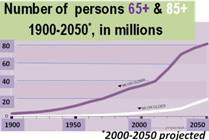
Graph of aging population increases 1900 to 2050Why is this important? The introduction to the Vienna International Plan of Action on Ageing (1982), the first international instrument intended to guide the formulation of policies on aging, commented on the “social, economic, political and scientific questions raised by the phenomenon of ageing on a massive scale” unknown in previous years, and the trend toward increasing numbers of people living longer is continuing. Since I am, ahem, slowly but relentlessly approaching membership in the “older person” group, since most if not all of us know and care about people who are “older persons” already, and since (with a little luck) most of us will one day be “older persons’ ourselves, these issues affect all of us.
At the second world assembly on aging in 2002, a plan of action was adopted that had three priority directions: older persons and development; advancing health and well-being into old age; and ensuring enabling and supportive environments. The report states that the increase in persons over 60 years of age

“will be greatest and most rapid in developing countries where the older population is expected to quadruple during the next 50 years. This demographic transformation challenges all our societies to promote increased opportunities, in particular opportunities for older persons to realize their potential to participate fully in all aspects of life.”

World Alzheimer's Report 2009 coverUnless we are hiding under a rock, we all hear about a number of issues facing our aging populations, such as financial concerns, nursing home quality control, and many age-related health issues. Recently, for example, I was listening to a segment on NBC’s Today show about one of the health issues related to aging: Alzheimer’s. The cases of people with this dreadful condition are increasing faster than was predicted; according to the World Alzheimer Report dementia cases will nearly double every 20 years, and by 2050 it will affect a “staggering 115.4 million people.” The implications are rather staggering as well. How would we provide decent care for so many? In the meantime, the National Institute on Aging has some information online for this and other age-related health issues. Continuing research on these issues is important so that our increasing numbers of older persons can enjoy a high quality of life for as long as possible. And it will benefit all of us (eventually). It’s also important to consider how our treatment of our older population reflects on us now, and how it will impact the way we are treated as we ourselves age.
Social Policy and Aging book coverIf you are interested in doing research on topics related to aging, Andersen Library has materials you can use. Searching the HALCat, Andersen Library’s catalog, would find titles such as Exploitation of seniors: America’s ailing guardianship system: hearing before the Special Committee on Aging, United States Senate (online or 2nd-floor Federal Documents, Y 4.AG 4:S.HRG.109-753) and Social policy & aging: a critical perspective (3rd-floor Main Collection, HQ1064.U5 E76 2001). Please ask a librarian for assistance with finding materials.

Government Printing Office logo

The University Library is a federal depository with many federal, state, local, and international documents on a variety of current and relevant issues available to you in print, microfiche, CD-ROM, and electronically. Come check out your government at the University Library!

Posted in around the world, info.gov | Tagged , , , , , , , | 1 Comment