By: Tess Nogalski
In the United States, 1 in 7 households are food insecure (USDA). The holidays are a time for families to come together and celebrate one another. The concern of where the next meal will come from shouldn’t overshadow the joy of gathering with loved ones.
Food Insecurity
Food insecurity is the inability to consistently access adequate and nutritious food due to a lack of money or resources. 1 out of every 4 students is food insecure (Larin, 2024). But it extends far beyond the college campus. There is no single group impacted by food insecurity; it can affect anyone, from individuals living alone to entire households. Contributing to this challenge are food deserts (areas where residents lack consistent access to affordable and healthy food options), making it even harder for families to meet their nutritional needs.
The Holiday Season
During the holidays, food pantries play an essential role in supporting individuals and families who may be struggling to make ends meet. This time of year often brings added financial pressure, from higher utility bills to the expectation of special meals and gatherings (which can make food insecurity even more challenging). Pantries help bridge that gap by providing nutritious ingredients, holiday staples, and a sense of relief for those who might otherwise go without. Beyond meeting basic needs, they help ensure that everyone has the opportunity to participate in the traditions, warmth, and connection that make the season meaningful.
Why it’s important to give back
Food is a basic human need. Those in your community may be struggling with finding affordable and nutritious food. By donating to your local food pantry, you are contributing and strengthening your community. During the holidays, this support becomes even more meaningful as many families face added financial pressure and hope to share special meals with loved ones. Your contribution can help ensure that everyone has the opportunity to experience the warmth, connection, and traditions that make the season special. If contributing financially or through physical donations is difficult, volunteering is another meaningful way to support your community.
Resources in the Whitewater Community
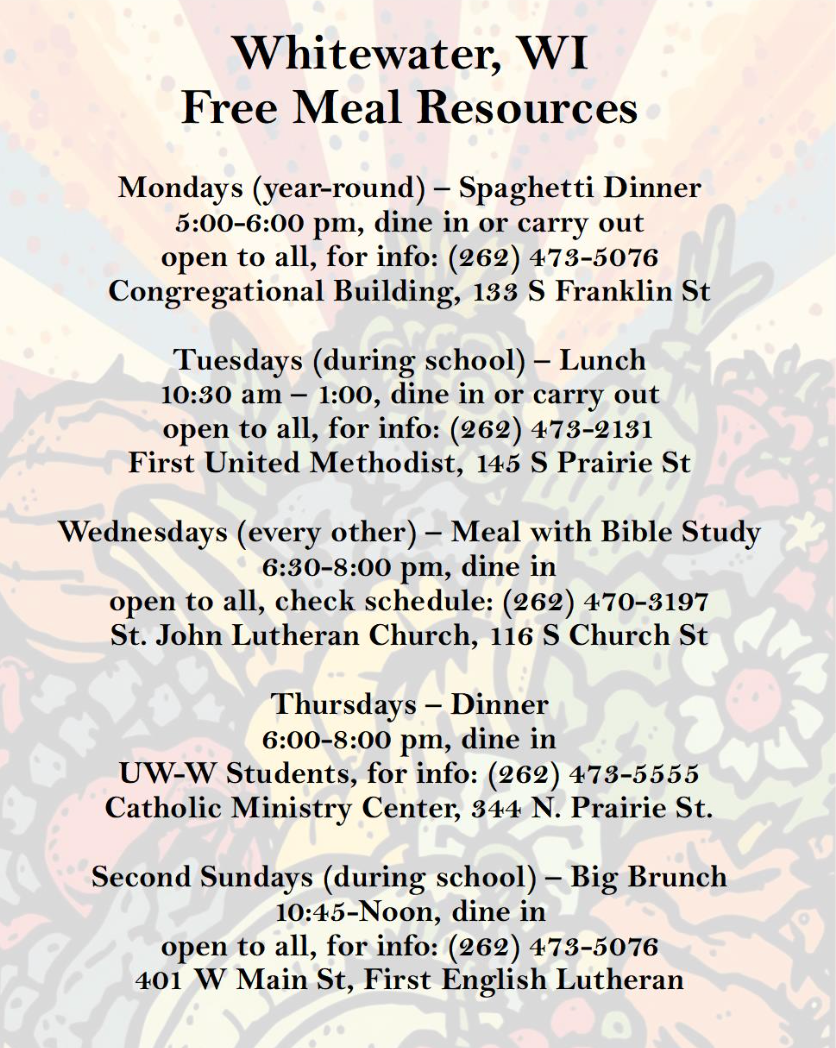
Whitewater has many establishments that cater to providing food resources to the Whitewater community. On campus we have the Warhawk Pantry that is targeted to students but open to all (https://www.uww.edu/uc/resources/warhawk-pantry). Those looking for consistent support should check out the Community Space in Whitewater (https://communityspacewhitewater.com/). The Community Space has items from foods to clothes, to books, to furniture and more. There is also the Whitewater Community Food Pantry. This Pantry is targeted towards the community members of Whitewater that need it. There are also many local churches that offer a free meal a week!
Additional Resources
If you or someone you know is experiencing food insecurity, there are many resources available to help. Programs like SNAP, Supplemental Nutrition Assistance Program (https://www.fns.usda.gov/snap-directory-entry/wisconsin Food and Nutrition Service) provide monthly benefits to help individuals and families buy groceries. FoodShare, a state-run nutrition assistance program in places like Wisconsin, offers similar support to help people access healthy food (https://www.dhs.wisconsin.gov/foodshare/resources.htm Wisconsin Department of Health Services). Local food banks and pantries often provide free fresh produce, canned goods, and household essentials (no proof of income required at many locations). Many schools and colleges also have student food pantries or emergency meal assistance. Additionally, local nonprofit organizations, religious centers, and community centers frequently host distribution events or can connect people with financial support and nutrition programs. Reaching out for help is a strong step, and these resources are designed to support anyone who needs them.
References
Larin, K. (2024, August 15). Supplemental Nutrition Assistance Program: Estimated Eligibility and Receipt among Food Insecure College Students. Gao.gov. https://www.gao.gov/products/gao-24-107074
USDA. “Food Security in the U.S. – Key Statistics & Graphics.” USDA.gov, 8 Jan. 2025, www.ers.usda.gov/topics/food-nutrition-assistance/food-security-in-the-us/key-statistics-graphics.
Leave a Reply