
The University of Nebraska-Lincoln has a digital Government Comics Collection containing comic books produced/distributed by various governments (U.S. Federal, state, United Nations and European Commission). Also included are some state and federal hearings, posters, and pamphlets.
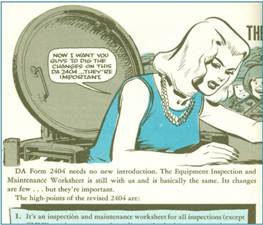 There are some really unexpected items in this collection. Who’d expect the 1964 Army Equipment Record Procedures technical manual to be in a “comic” format?! Anything to get people to read it, I guess.
 They aren’t all historical titles, though. One that is more timely, from 2006, is A penny saved: Why and how we save and how saving helps the U.S. economy (from the Federal Reserve Bank of New York).
 And of course a number of the comics are aimed at children (in spite of the Army title I mentioned earlier!), such as McGruff’s Surprise Party.
 An example of a UN comic is UNICEF’s Superman and Wonder Woman: The hidden killer, which is about land mine awareness and aimed at children in Honduras, Nicaragua, and Costa Rica.
There’s a simple search box for finding comics of interest to you at the top right, or use the “Search” link above the search box to do more sophisticated searching, such as limiting to specific phrases. If you use this search page, be sure to select the “Government Comic Collection” from the list of collections and click “add>>” before running a search.

The University Library is a federal depository with many federal, state, local, and international documents on a variety of current and relevant issues available to you in print, microfiche, CD-ROM, and electronically. Come check out your government at the University Library!

 Actor Karl Malden passed away on Wed., July 3rd. I enjoyed watching Mr. Malden in television’s
  OK, we also lost some other well-known people recently. The Library has a movie Farrah Fawcett made with Robert Duvall in 1997:
 But natural fibers like cotton aren’t good only for their ventilation. They also are environment-friendly, renewable, and sustainable, as well as vital to the economies of many developing countries and the livelihoods and food security of millions of people. Did you know that “more than 60% of the world’s cotton is grown in China, India and Pakistan? In Asia, cotton is cultivated mainly by small farmers and its sale provides the primary source of income of some 100 million rural households.” You can get more information from the web site linked above.