Social Media – January 26
Social media is about networked digital platforms where people create, share, and engage with content. These platforms allow individuals, communities, and organizations to communicate instantly across the world. While it seems as something we casually use every day, social media is a powerful communication system that shapes culture, politics, and everyday life. Social media works as both an art and a science. It is an art because it depends on creativity, storytelling, and emotional connection. It is a science because every successful post, there are data-driven strategic decisions about timing, audience, and platform.
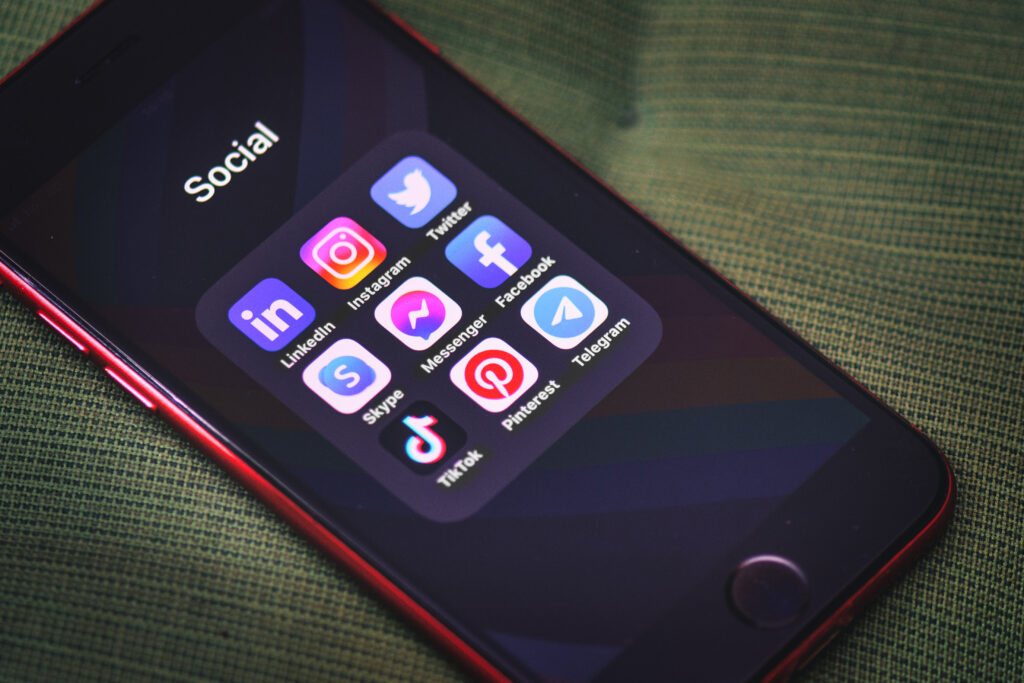
One of the main functions of social media is information sharing. We now mostly get our news, updates, and breaking events directly from social platforms rather than traditional media. Social media is also about relationships. It allows people to interact directly with celebrities, brands, political leaders, and one another.
In addition, social media plays a major role in identity and first impressions. Every profile, post, or video communicates something about who we are and how we want to be seen. As a tool of influence, social media shapes opinions, trends, and even social movements.
A key feature of social media is user-generated content. Most of what we see online is created by everyday users rather than professional media organizations. Another defining feature is the capacity to go viral. Content can spread extremely fast through networks, sometimes reaching millions of people within hours. Social media also creates online reputations, where public perception is shaped by likes, shares, comments, and visibility. Because attention is limited, platforms rely heavily on visuals and storytelling to quickly capture interest.
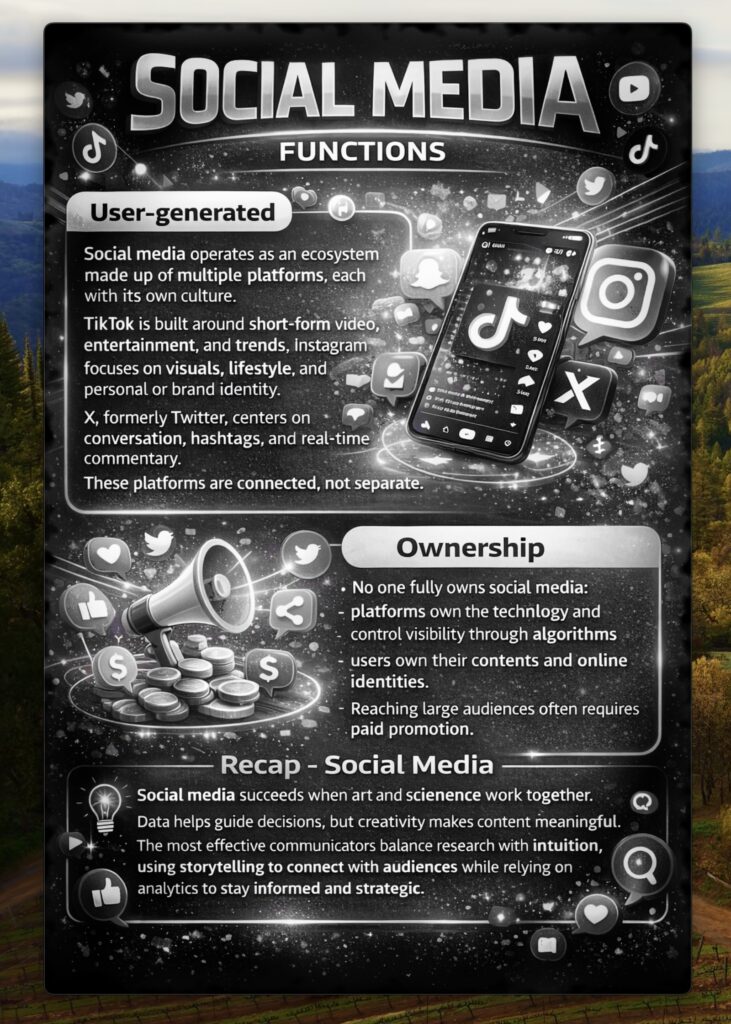
Social media operates as an ecosystem made up of multiple platforms, each with its own culture. TikTok is built around short-form video, entertainment, and trends. Instagram focuses on visuals, lifestyle, and personal or brand identity. X, formerly Twitter, centers on conversation, hashtags, and real-time commentary. These platforms are connected, not separate. A video posted on one platform can easily circulate across others, expanding its reach.
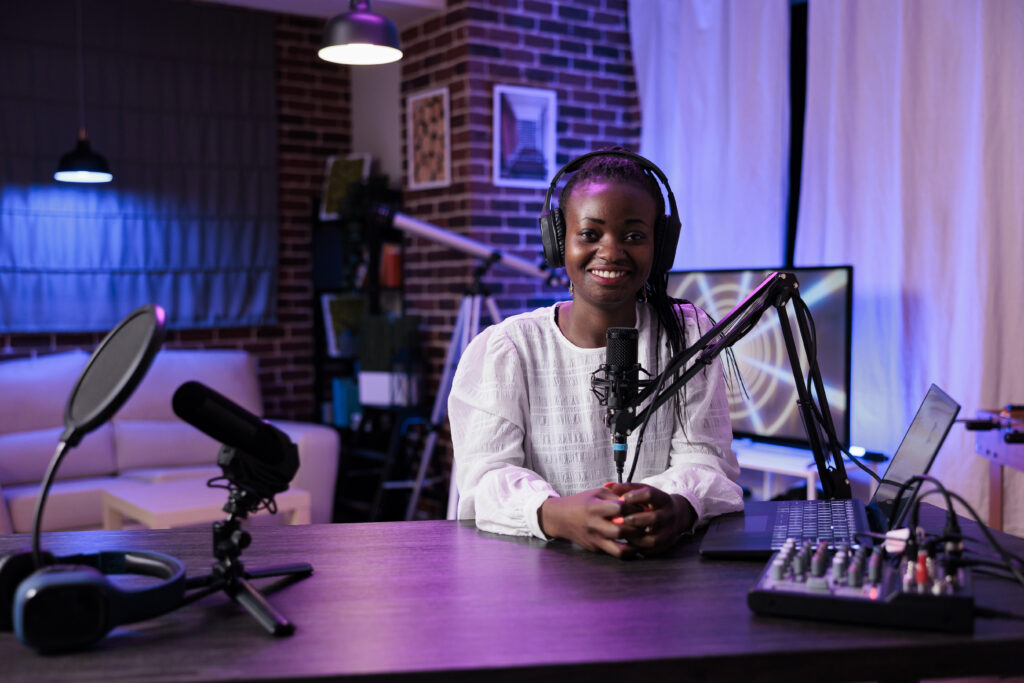
Over time, social media has evolved rapidly. Platforms constantly copy successful features from one another, such as Stories or short-form video. There has been a clear shift toward fast, snackable content, livestreaming, and creator-led media. Today, social media often feels like a digital reality show, where stories unfold in real time and audiences follow ongoing narratives.
When it comes to ownership, no one fully owns social media. Platforms own the technology and control visibility through algorithms, while users own their content and online identities. However, reaching large audiences often requires paid promotion. Social media content generally falls into three categories: owned media, like your personal page; earned media, like shares and reposts; and paid media, like advertisements.

Using social media strategically means being intentional. Before choosing a platform, it is important to think about your audience and what you want to achieve. Different platforms support different voices and personalities. Content should be flexible enough to work across platforms, and analytics should be used to understand what is effective.
Finally, social media succeeds when art and science work together. Data helps guide decisions, but creativity makes content meaningful. The most effective communicators balance research with intuition, using storytelling to connect with audiences while relying on analytics to stay informed and strategic.
Wachanga @ January 26, 2026