Author Archive

Investigative Project 

Monday, December 1st, 2025

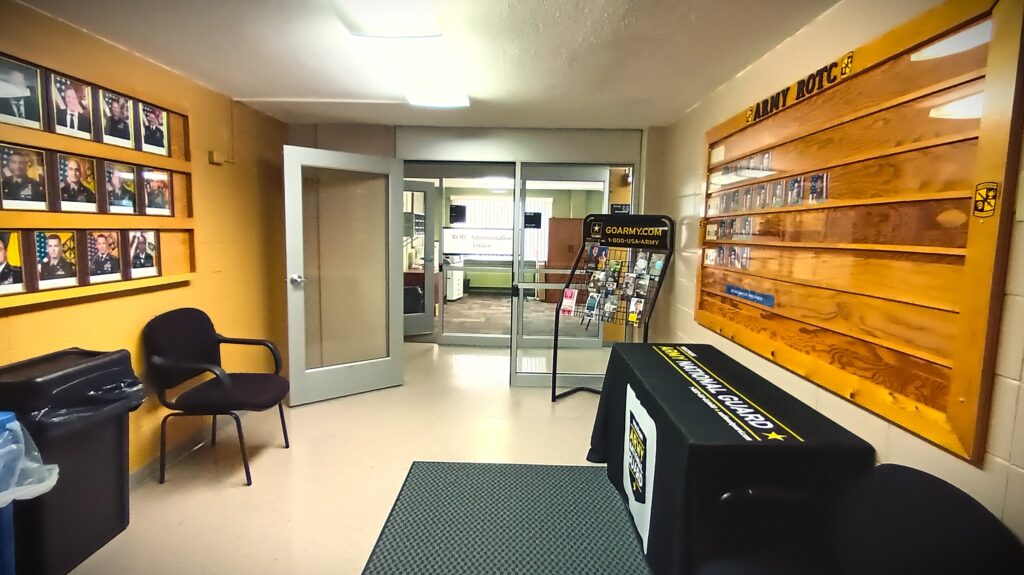
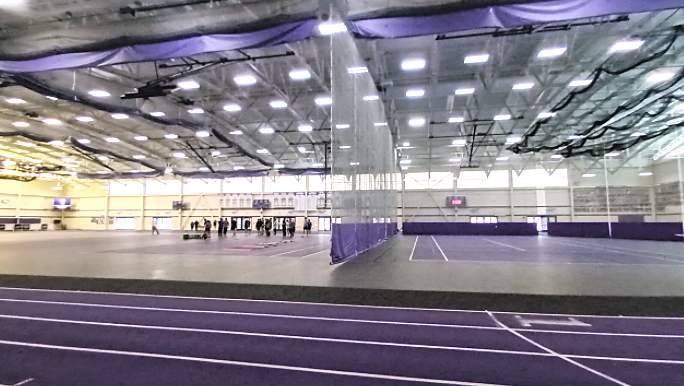
UWW Shares Facility with ROTC 

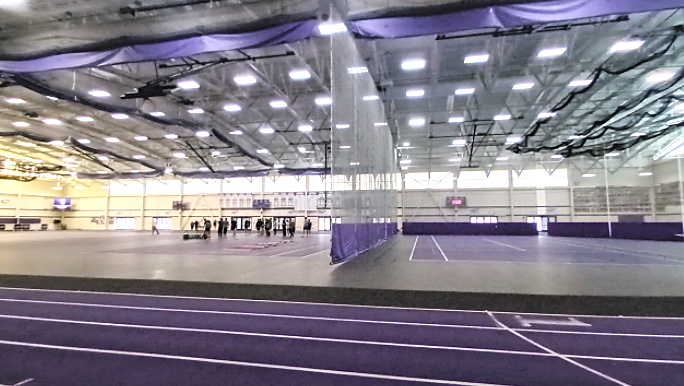
For several weeks, ROTC cadets and non-military students have been sharing the gym and track areas during overlapping time slots, creating confusion and frustration for many who have Physical Education or Athletic classes at the Williams Center early in the day. The ROTC’s presence in the space is not new or unexpected; their training schedule is approved at the start of the academic year. 

“The ROTC program schedules that area with the gym,” explained Sergeant Matthew Sullivan, who oversees military-conditioning courses at UWW. “It allows students who aren’t even interested in ROTC to take it, one, to experience how the military does PT, and two, to get PE credit.” 

However, this semester has brought unusually high enrollment, and the Williams Center is showing signs of strain. With more people than ever trying to use the same limited areas, coordination has slipped. “It’s getting pretty busy in there,” Sullivan noted, suggesting the concern needed to be raised with Williams Center staff. 

Students, who preferred to remain anonymous, reported that the crowding feels more than just inconvenient. Many expressed frustration that, as paying students, they were never informed about why their class experience had changed dramatically. It felt as if all the instructors themselves lacked the information needed to share. 

Scheduling Issues and Signs of Tension 

Observations over September and October (2025) revealed growing, subtle tension among instructional staff using the gym and track during early-morning hours. Nothing escalated into formal conflict, but there were repeated moments of discomfort. One instructor in particular from the sports department appeared consistently frustrated by unexpected overlaps and declined to participate in a formal interview. 

Students noticed patterns immediately. They expressed disappointment that the administration had not communicated any information related to how campus overpopulation affected class settings, nor how the reservation system worked behind the scenes, any information would have been better than being ignorant; after all this is a university. 

During the interview with Coach Corey Meredith, who has been working only two months by the time of the interview, made it clear that some staff had not been informed that the space functioned as a classroom or that there were many classes going on in the mornings, in the same area at the same time period. When asked about the reservation system and whether he knew what classes were scheduled in the same area, he explained: 

“I’m not aware. What I’ve understood is we kind of use the facility. I think athletics maybe takes precedence over it, like in season athletics, and then out of season athletics, obviously, if there’s a class, we work around that, or if there’s an event, we work around that. But that’s what I’ve understood it since I’ve been here.” 

His comment reinforced the central issue: instructors were doing their jobs but lacked clear information about shared facility scheduling and space. 

Causes Behind the Facility Overlap 

Although ROTC’s reservations were properly documented, confusion surfaced among non-ROTC instructors who either were not familiar with the reservation process or did not know which department to contact. Without clear communication channels, instructors ended up reacting in real time instead of planning ahead. Campus overpopulation amplified the situation, highlighting that these issues stemmed from logistical strain, not personal conflict. 

Impact on the Instructional Environment 

Nobody is acting with ill intention; everyone is just trying to teach or train, and students are trying to learn, but the lack of a unified communication protocol has created unnecessary stress. Students notice the tension, and classes feel more chaotic than they should. Multiple instructors teaching at once raise noise levels, split attention, can make it difficult to follow instructions. When the environment is overcrowded, even the most cooperative staff members cannot fully manage their teaching conditions. 

Findings and Outcome 

After speaking with instructors and observing several sessions, it was clear a big part of the confusion was simply not knowing the right details. Many instructors from different programs were unaware of how the reservation system worked, that existed or who to contact. The overcrowded campus only added stress to the problem and became more noticeable. The root cause, in the end, was not conflict between individuals or favoritism toward any group. It was a shortage of space combined with inconsistent communication. 

Ideally, the long-term solution would be additional space, a new gym, and track, but that is not feasible at the moment. For now, the hope is that with clearer scheduling, open communication, and a shared understanding that everyone is navigating the same overcrowded environment, the Williams Center can become a more coordinated and harmonious space for all who rely on it. 

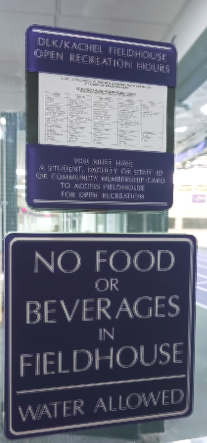
This report helped bring everyone together on the same page. Since the interviews, staff posted signs, instructors have begun using other rooms in the Williams Center for classes, also staff and instructors have increased communication with one another. Whether these improvements will last remains to be seen, but at least now there is acknowledgment that the issue exists. The result has been a smoother flow during early-morning hours for instructors and students, and a more respectful sharing of the space under the circumstances. 
Final Research Paper

Saturday, November 29th, 2025

The two videos: Not For Resale and Converging Technologies, focus on technology, but from
completely different angles.

One looks back; the other looks forward. Not For Re-sale is all about nostalgia, the love for old video games, and how physical game stores are fading away. It treats these places almost like museums where people connect to the past. You can feel both the sadness of losing something meaningful and the joy of remembering what shaped us.
Converging Technologies, on the other hand, talks about how far we have come in the last 30 years. It shows the jump from computers the size of closets and phones that looked like bricks to tablets, smart devices, and AI. Honestly, Star Trek writers were ahead of their time; they imagined tablets 60 years before we had them. Maybe they knew something we didn’t and expressed it through “fantasy,” when in reality, they were describing the future we now live in.
What the videos have in common is simple: they are about technology and our relationship with it, the past we come from, and the future we are walking into. One celebrates where we have been; the other celebrates where we are going.
Technology has become part of our daily lives whether we like it or not. I am aware of that, and I accept it. Society needs to do the same, awareness and acceptance. It is here, it is advancing, and it is not slowing down. These videos make that clear.
They are almost motivating, in a way, encouraging us to embrace what is coming. Even though I still enjoy things like snail mail and going to the post office, I love that I can contact anyone within seconds. I can tell if somebody is doing well just by how fast they reply or even read the mood behind their messages. That is communication technology, too.
On the gaming side, it is not just a hobby anymore; it is a career for many, a new living if you
will. I support that… partially. Some games go too far, too violent, too chaotic, and people dive
into them with no discipline. There is no balance. And that leads to issues: mental fatigue,
overstimulation, and who knows what else? I believe in the connection between shootings with the lack of control with technology or video games. We don’t fully understand how much this affects the brain yet. But with moderation, games can be helpful. They can teach, they can connect, and they can be part of a healthy “tech diet.”
Technology also makes life easier. I can take online classes without driving in the cold. A teacher and a student can connect instantly through a device and invisible waves we cannot see, like magic. Some people take advantage of this convenience and get lazy, depending completely on technology for everything, manners, entertainment, problem-solving, forgetting that our brain is still the greatest tool.

But for others, like me, technology opens doors. My car alerts me when I need oil. My phone lets me take high-quality pictures without depending on someone else. I can print photos without going to a lab. I can learn and move forward at my own pace with online classes. It is helpful, and I am grateful for it.
Even though these videos do not touch on every detail I mentioned, they support the bigger idea: change is constant. The past fades, the present moves fast, and the future is already knocking.
There is a sadness when things disappear, but also great joy, because it means humanity is still
creating, growing, and thinking. In the end, both videos reminded me that it is good to remember the past, enjoy the present, and get excited for the future.

Academic Articles and Analysis

CONTECS Final Report (2008) examines the convergence of nanotechnology, biotechnology, information technology, and cognitive science (NBIC), emphasizing that these fields are increasingly interdependent and carry wide societal implications. The report explains that NBIC integration brings “ethical challenges, governance concerns, and the need for interdisciplinary collaboration,” and warns against “deterministic visions of human enhancement” that oversimplify what these technologies can achieve (CONTECS Final Report, 2008). The analysis complements the arguments in Converging Technologies, Shifting Boundaries or CTSB, which notes that NBIC convergence destabilizes traditional categories and “blurs the boundaries between science, technology, and society” (CTSB, 2009). According to the article, as technological systems merge, cultural and ethical frameworks must adapt because “existing distinctions between human and machine, organic and synthetic, and public and private can no longer be taken for granted” (CTSB, 2009). Both sources call for inclusive, reflective governance to ensure these transformations benefit society rather than outpace critical oversight.
In contrast, the Not For Resale reviews illustrate another form of convergence occurring in digital media culture. Reviewers describe the decline of physical game stores and a shift toward digital distribution, highlighting community loss, nostalgia, and concerns about preservation. One reviewer notes that the film portrays “the last breaths of the small business, used video game store industry,” emphasizing how local shops are disappearing as digital platforms dominate (IMDb User Reviews, 2020). Professional commentary echoes this sentiment: digital marketplaces may “erase some games from existence” as physical media becomes obsolete and server-dependent titles vanish from circulation (Megavisions Review, 2020). These reactions parallel NBIC scholarship by showing how technological change reshapes identity, economy, and culture.
While NBIC research examines shifts in scientific and human-enhancement boundaries, the
documentary’s reception shows how everyday cultural practices, from collecting games to
participating in local retail communities, are equally transformed by new technological systems.

Meta-analysis

These videos, and honestly this whole course, taught me something bigger than just new
communication technologies. They reminded me that technology isn’t an enemy. It Is not something to fear or reject. It Is something to understand, use wisely, and grow with. And that Is exactly what I am taking from this class.
Everyone learns something different from these videos. For me, Not For Resale showed how people hold onto the past, the comfort of things they can touch, the memories that come from old devices and game stores. Converging Technologies showed the opposite, how fast things are moving, how much we have created in such a short time, and how the world keeps changing whether we like it or not.
Together, the videos made one message very clear: technology is here to stay, and we are better off when we work with it instead of fighting it.
And that is really what I learned in COMM 440. To embrace it. To understand it. To be aware of how it affects us. To use it with intention instead of fear. Technology can help us, but only if we
approach it with knowledge, balance, and care, just like anything valuable in life. If we ignore
it, misuse it, or stay stuck in the past, then yes, it can hurt us. But if we are mindful, if we
stay aware and keep learning, it becomes one of our greatest tools.

It took society over 60 years to finally realize technology wasn’t going anywhere, and that it was going to keep evolving. And still, many people resist it. Not because it is “evil,” but because
embracing technology means embracing change. It means learning again. It means growing. And people convince themselves that learning stops once they reach a certain age. They limit themselves. They create excuses. But no one ever said we had to stop learning. No one ever said our brains have an expiration date. That is why I appreciate this class so much, and why I want to thank you, Dr.Wachanga. There are teachers who make learning feel heavy, something you want to run away from. And then there are teachers like you, who make learning something we actually want to do. I will not lie, I am not crazy about assignments in any class, but I know they are part of the process. They push us, they help us grow, and they make the message stick. And in this class, the message was loud and clear: we have the tools. We have the resources. We have the ability to use technology in ways that connect us to the world, through blogs, Facebook, video games, memes, all of them. Yes, even memes teach us something about culture and communication. Technology lets us reach people we would never have meet otherwise. But we cannot forget where we came from, either. The past is important, just not a place to live in. We remember it, learn from it, and keep moving forward.

What do I take from this course?

That the future is bright. That technology is not replacing us; itis supporting us. Things are evolving and we need to evolve with the new future. It is not going to be easy, but it will be worth it. Our brains are still stronger than any device, but only if we use them. And that learning never stops unless I stop it.
After reviewing the research on Converging Technologies alongside the public commentaries about Not for Resale, one clear conclusion emerges: many people are genuinely concerned about how technology will shape the future of humanity. These worries are natural, even expected, uncertainty has always been part of human nature. While we cannot prevent every fear or every challenge that comes with technological change, we can trust that people will continue striving to make thoughtful decisions.
Humanity learns, adapts, and ultimately moves forward. Technology is useful and powerful, but like everything we create, it is imperfect.
I also chose to include a personal review from a viewer who is not an academic scholar, because public voices matter. Even if someone does not have the same educational background as a researcher, they bring something equally valuable: lived experience. They witness how technological change affects everyday life, culture, and community. That perspective deserves recognition, and for me, it carries real weight.

###

References

James, K. (Director). (2020). Not for resale: A video game store documentary [Film]. Principal
Media. https://www.kanopy.com

TV Choice. (2008). Converging technologies [Film]. TV Choice. https://www.kanopy.com
European Commission. (May 2008). CONTECS final report (Publication No.

124377001-6_en.pdf). 124377001-6_en.pdf

IMDb. (2020). Not for Resale (2019): User reviews. https://www.imdb.com/title/tt6483458/reviews/

Megavisions. (2020). Review: Not for Resale: A video game store documentary.
https://www.megavisions.net/review-not-for-resale-documentary/

Schuurbiers, D., & Fisher, E. (2010). Converging technologies, shifting boundaries. Science and
Engineering Ethics, 16(1), 31–45. https://doi.org/10.1007/s11948-009-9158-2

Vita Player. (2019). Documentary review: Not for Resale. https://www.vitaplayer.co.uk/

Free AI writing assistance. Grammarly. (n.d.). https:www.grammarly.com

Thank you, Dr. Wachanga, for guiding us, for teaching with patience and understanding, and for making this class meaningful.

😎The future is shining. Wear your sunglasses. 😎

contact info

Saturday, November 29th, 2025

nightingale4898@gmail.com

Please give me 48 hours to reply and possibly to post your comment. Thank you.

Time flies

Saturday, November 29th, 2025

The 2024 United States Presidential Election on Wikipedia

Saturday, November 29th, 2025

Sophia Guedj
Comm 440
Dr. Wachanga
October 7, 2025


The Living Debate of Knowledge: The 2024 United States Presidential Election on Wikipedia
I chose the Wikipedia page for the 2024 United States presidential election because it shows, almost perfectly, how discussion and debate evolve around something as huge as the American presidency. The page is like a living battlefield of perspectives, and it reveals how the Wikipedia community lives by its own core principles: neutrality, verifiability, consensus, and civility. It also shows how fragile all that is when people bring politics, bias, and emotion into the mix.
The 2024 election between Kamala Harris and Donald Trump was one of the most divisive events in modern U.S. politics, and you can feel that tension running through every edit, every comment, and every argument on the Talk page. I believe the page truly reflects the best and worst of Wikipedia’s process, where people try to be fair and factual but can’t help being human at the same time.


How the Entry Was Built
When I started exploring this entry, I did not just read the article. I went into the Talk page, the Revision History, and even the History tools, where you can see thousands of edits stretching back to 2015. It is incredible how much happens behind the scenes. The debates there are loud, emotional, and sometimes childlike, people accusing each other of being biased toward Harris or Trump, like: “Why do you have that about Harris but not about Trump?” or “Why don’t you show what Trump did right?” It feels like a classroom of kids yelling, but in a strange way, that noise is the sound of knowledge being made.
This page even has a protection barrier; you have to identify yourself or log in properly because of vandalism and trolling. Wikipedia moderators warn people not to post political jokes or false claims. That level of gatekeeping actually proves how serious this page is. Even though anyone can edit Wikipedia, not everyone can edit this page without scrutiny. The administrators, editors, and bots all work together to guard it from chaos.


Wikipedia’s Core Principles in Action
The core principles of Wikipedia, neutrality, verifiability, and consensus, are visible in every debate about the election article. Editors constantly quote rules like “NPOV” (Neutral Point of View) or “No Original Research” to remind others that personal opinions do not belong there. When someone adds language that sounds
too supportive or too critical of a candidate, another editor jumps in and either tags it or deletes it entirely.
But these arguments are not just about facts, they are about framing. Words like “claimed,” “stated,” or “insisted” can spark long conversations about bias. Some editors want to soften language; others want to make it sharper. It becomes an exercise in diplomacy, where the goal is not to win but to reach a sentence everyone can live with.


Patterns and What Drives the Revisions
Looking at the revision history, I noticed that edits come in waves. The busiest times happen during key events, campaign announcements, debates, scandals, and especially the election itself. In those moments, hundreds of small edits appear within hours. People rush to update statistics, correct quotes, and link new articles.
The changes are triggered by breaking news and by people trying to keep the narrative “balanced.” You can see that editors are constantly reacting to what’s happening outside of Wikipedia, which means the encyclopedia is almost breathing in rhythm with the real world.
The editing patterns also reveal how conflict becomes a quality-control mechanism. The louder the debate, the more likely someone will check sources, verify facts, or rewrite awkward phrasing. Conflict, in this sense, doesn’t destroy truth, it strengthens it.


What Gets Debated, What Gets Settled
Almost everything is debated at some point: turnout numbers, controversial remarks, allegations, and interpretations of events. Editors fight over what belongs in the article and what should be left out. The Talk page shows that while factual errors get fixed quickly, interpretive disagreements take forever.
For example, when one editor added a sentence about Harris’s campaign strategies, another demanded a citation; when someone mentioned Trump’s ongoing investigations, others debated whether that counted as “encyclopedic relevance.” This back-and-forth process can feel exhausting, but it is also what produces balance. The final article reads as calm and neutral only because so many people fought for every single word.


When Did It Become ‘Accurate’?
After reading all this, I think the page became relatively accurate in late 2024, right after the final results were confirmed and most speculative content was removed. But “accurate” does not mean “done.” When I checked the page today, it had already been edited again. That is outrageous and amazing at the same time. It shows that on Wikipedia, no page ever stops evolving. A Wikipedia article is never “finished.” It’s more like a living organism, always growing, shedding, and reshaping itself in response to new information or new
perspectives. What’s true today might be challenged tomorrow, and that is not a flaw, it is the system working.


Conflict, Bias, and Reliability
One of the questions I had going in was whether conflict makes information less reliable. But now I think it is the opposite: conflict creates accountability. When editors disagree, they force each other to defend their claims and back them up with credible sources. That is how the page slowly filters out bias and falsehoods.
And because this article is heavily protected, trolling is minimal, and serious editors dominate the conversation. Their debates might sound harsh, but they lead to clarity. The final product becomes a kind of collective truth, not because everyone agrees, but because everyone keeps checking everyone else.


The Role of Editors and the Construction of Knowledge
Editors are the unsung heroes of Wikipedia. They decide what stays, what goes, and how information is phrased so readers can understand it clearly and fairly. Their choices literally shape public understanding. They balance tone, verify data, and translate complex political moments into sentences that sound neutral but still informative.
Through their constant negotiation, editors prove that knowledge online is not discovered, it is constructed. Each paragraph is a compromise, built from hundreds of tiny arguments about what’s real, what is relevant, and what is fair.


Conclusion: Wikipedia as a Living Record
In the end, this assignment made me realize that Wikipedia is more than just a website, it is a mirror of how society itself argues about truth. The 2024 United States presidential election article is a perfect example of that struggle. It is serious, constantly changing, and sometimes exhausting to follow. But it is also beautiful in a way, because it shows people from all over the world trying to tell one story together.
Therefore, can a Wikipedia page ever be “done”? Probably not. But that is the point. The constant updates, debates, and corrections are what make it alive, and alive is how truth survives.

#

Citations
Wikimedia Foundation. (2025, October 7). 2024 United States presidential election. Wikipedia. https://en.wikipedia.org/wiki/2024_United_States_presidential_election
Free ai writing assistance. Grammarly. (n.d.). https://www.grammarly.com/

Extra Credit (24 points) 

Saturday, November 29th, 2025

1

I was reluctant to take this class as it was imposed on me, and I did not have the necessary time or financial resources, I still have no money, especially now with housing raising my rent. I was really disappointed to find out that it will not be required for next fall. But because of timing, I did not have a choice. I had to just deal with it and move forward. But here is the funny part: after all the stress and complaining, I ended up needing this class anyway. If I did not take it now, I would have had to take it next spring. Isn’t that odd? I spent hours upset about the time and money, and suddenly it turned out I had to take it no matter what.
Once I got into it, I actually enjoyed doing the food experiments, even though one of them did not work the way I wanted to. The technological part, though? The computer and Wi-Fi did not want to work with me. That made the assignments frustrating, annoying, and honestly just obnoxious. I did not want to deal with that, especially when my laptop or internet kept failing. It is 2025 why we are still struggling with Wi-Fi, uploading, downloading, pictures, and all of that! I am paying enough money to have decent internet that should not make me want to scream.
After working so hard on my experiment, I was proud of what I did. I understood it, processed it, and was ready to submit. Then the tech problems ruined everything. If I ever must take a class this technical again, I am doing it in person. This type of class should not be online. I would rather be in a real kitchen with a teacher and classmates than alone, unable to ask questions, like when I saw the “bleeding” nail experiment. That was so cool, and I would have loved to talk about it in the moment.

Chemistry, or science in general, has taught me that with the right tools, we can discover how lifeworks. If you are observant and open-minded, you can apply this knowledge to your daily life.
Throughout my experiments, I have consistently seen God’s presence at work. While we may believe we are creating things, we are, in fact, uncovering what already exists in His creation. It is like opening a book and discovering the meanings of the letters inside.
Chemistry and science are like a book that not everyone can read or access. For those who engage with it regularly, I am truly thankful. It is through these individuals who study, embrace, and apply chemistry that we experience the wonders of God’s creation in the form of good health, hygiene, clean environments, nutritious food, an overall better quality of life. This is what I have come to understand about chemistry, science, and God’s role in it all.

To be honest, I did not expect this class to matter as much as it did. At first, it felt like
something imposed on me, just like PE this semester. But looking back, even those classes taught me something valuable: the importance of routine. Everything in life comes down to routine. If you want to move forward, you need to structure a healthy routine that builds you up, not one that tears you down. All my classes have had one common goal: academic success. That is why my GPA is high. That is why I care so much about my grades and seek help when I need it. For me, grades are not just numbers, they reflect effort, both mine and my teachers’. When a student fails, it is rarely because they are incapable; it is often because they did not have the right support. A teacher who cares can make all the difference.
My study habits are strong, but this class reminded me of something I have neglected: taking care of myself. Most days, I barely eat, sometimes just one meal. Supplements and vitamins help, but nothing replaces a wholesome meal. And honestly, that was part of this class: learning to eat well, cook, and use kitchen tools, skills I did not have before. I also learned that rest matters. I am not great at it because I am always working on finishing and submitting my assignments on time.
With seven classes, unhelpful staff, and personal challenges, it is hard and complicated. But here is what I have realized: sleep and food are not optional, they are essential. Without them, no one can thrive, let alone succeed academically.
Success starts with wanting it. If you do not want to succeed, nothing anyone does will help. Hopefully, most of us come to college with that desire. If not, what is the point? And I hope teachers understand that we want to grow, move forward, and never stop learning. The habits I have built with this class are part of a bigger truth: making time for what matters. That is the key to success, not just in school, but in life.

My advice to others: enjoy the process and learn something useful from it. Chemistry is not just a science; it is a way to understand life if you let it. Don’t just focus on what is in your hands; pay attention to the meaning behind it. Every experiment, every concept has a bigger picture. Observe, think, and connect it to the world around you. That’s where real learning happens.

The Living Debate of Knowledge

Monday, November 17th, 2025

The 2024 United States Presidential Election on Wikipedia
I chose the Wikipedia page for the 2024 United States presidential election because it shows, almost perfectly, how discussion and debate evolve around something as huge as the American presidency. The page is like a living battlefield of perspectives, and it reveals how the Wikipedia community lives by its own core principles: neutrality, verifiability, consensus, and civility. It also shows how fragile all that is when people bring politics, bias, and emotion into the mix.
The 2024 election between Kamala Harris and Donald Trump was one of the most divisive events in modern U.S. politics, and you can feel that tension running through every edit, every comment, and every argument on the Talk page. I believe the page truly reflects the best and worst of Wikipedia’s process, where people try to be fair and factual but can’t help being human at the same time.
How the Entry Was Built
When I started exploring this entry, I did not just read the article. I went into the Talk page, the Revision History, and even the History tools, where you can see thousands of edits stretching back to 2015. It is incredible how much happens behind the scenes. The debates there are loud, emotional, and sometimes childlike, people accusing each other of being biased toward Harris or Trump, like: “Why do you have that about Harris but not about Trump?” or “Why don’t you show what Trump did right?” It feels like a classroom of kids yelling, but in a strange way, that noise is the sound of knowledge being made.
This page even has a protection barrier; you have to identify yourself or log in properly because of vandalism and trolling. Wikipedia moderators warn people not to post political jokes or false claims. That level of gatekeeping actually proves how serious this page is. Even though anyone can edit Wikipedia, not everyone can edit this page without scrutiny. The administrators, editors, and bots all work together to guard it from chaos.
Wikipedia’s Core Principles in Action
The core principles of Wikipedia, neutrality, verifiability, and consensus, are visible in every debate about the election article. Editors constantly quote rules like “NPOV” (Neutral Point of View) or “No Original Research” to remind others that personal opinions do not belong there. When someone adds language that sounds
too supportive or too critical of a candidate, another editor jumps in and either tags it or deletes it entirely.
But these arguments are not just about facts, they are about framing. Words like “claimed,” “stated,” or “insisted” can spark long conversations about bias. Some editors want to soften language; others want to make it sharper. It becomes an exercise in diplomacy, where the goal is not to win but to reach a sentence everyone can live with.
Patterns and What Drives the Revisions
Looking at the revision history, I noticed that edits come in waves. The busiest times happen during key events, campaign announcements, debates, scandals, and especially the election itself. In those moments, hundreds of small edits appear within hours. People rush to update statistics, correct quotes, and link new articles.
The changes are triggered by breaking news and by people trying to keep the narrative “balanced.” You can see that editors are constantly reacting to what’s happening outside of Wikipedia, which means the encyclopedia is almost breathing in rhythm with the real world.
The editing patterns also reveal how conflict becomes a quality-control mechanism. The louder the debate, the more likely someone will check sources, verify facts, or rewrite awkward phrasing. Conflict, in this sense, doesn’t destroy truth, it strengthens it.
What Gets Debated, What Gets Settled
Almost everything is debated at some point: turnout numbers, controversial remarks, allegations, and interpretations of events. Editors fight over what belongs in the article and what should be left out. The Talk page shows that while factual errors get fixed quickly, interpretive disagreements take forever.
For example, when one editor added a sentence about Harris’s campaign strategies, another demanded a citation; when someone mentioned Trump’s ongoing investigations, others debated whether that counted as “encyclopedic relevance.” This back-and-forth process can feel exhausting, but it is also what produces balance. The final article reads as calm and neutral only because so many people fought for every single word.
When Did It Become ‘Accurate’?
After reading all this, I think the page became relatively accurate in late 2024, right after the final results were confirmed and most speculative content was removed. But “accurate” does not mean “done.” When I checked the page today, it had already been edited again. That is outrageous and amazing at the same time. It shows that on Wikipedia, no page ever stops evolving.
A Wikipedia article is never “finished.” It’s more like a living organism, always growing, shedding, and reshaping itself in response to new information or new
perspectives. What’s true today might be challenged tomorrow, and that is not a flaw, it is the system working.
Conflict, Bias, and Reliability
One of the questions I had going in was whether conflict makes information less reliable. But now I think it is the opposite: conflict creates accountability. When editors disagree, they force each other to defend their claims and back them up with credible sources. That is how the page slowly filters out bias and falsehoods.
And because this article is heavily protected, trolling is minimal, and serious editors dominate the conversation. Their debates might sound harsh, but they lead to clarity. The final product becomes a kind of collective truth, not because everyone agrees, but because everyone keeps checking everyone else.
The Role of Editors and the Construction of Knowledge
Editors are the unsung heroes of Wikipedia. They decide what stays, what goes, and how information is phrased so readers can understand it clearly and fairly. Their choices literally shape public understanding. They balance tone, verify data, and translate complex political moments into sentences that sound neutral but still informative.
Through their constant negotiation, editors prove that knowledge online is not discovered, it is constructed. Each paragraph is a compromise, built from hundreds of tiny arguments about what’s real, what is relevant, and what is fair.
Conclusion: Wikipedia as a Living Record
In the end, this assignment made me realize that Wikipedia is more than just a website, it is a mirror of how society itself argues about truth. The 2024 United States presidential election article is a perfect example of that struggle. It is serious, constantly changing, and sometimes exhausting to follow. But it is also beautiful in a way, because it shows people from all over the world trying to tell one story together.
Therefore, can a Wikipedia page ever be “done”? Probably not. But that is the point. The constant updates, debates, and corrections are what make it alive, and alive is how truth survives.

#

What is a Good House?

Tuesday, November 11th, 2025


What makes a good house? Is it just a structure or is it something more than a
home? A home isn't necessarily a house. It is made by the people who live in it. I
turned my dorm into my home; it is the only way I can survive at this stage of my
life. It is part of my college community, and I suppose that is the point, is where
my heart is, even if I have to remind myself of that just to stay functional. My
dorm helps me build a new history, one in which Hispanic women are not
commonly seen. My dorm is my house. It protects me and gives me the space to
study at the university here in Wisconsin. As a first-generation college student,
I'm breaking away from the traditional expectation that Hispanic women are
meant to be homemakers only. That was life’s offer for me, but I chose differently.
The price of that choice is high: I'm alone and I have no money. Still, I know it is a
necessary investment in my future.
The price of the place itself is not as important as how I feel in it. Like Rosetti
suggests in Goblin Market, it is the company that makes the difference. Laura had
Lizzie, someone who cared enough to save her. I don't think Laura truly
understood Lizzie’s sacrifice, but she was grateful. In my own way, I have also
people in this building who make me feel at home.
From the houses I saw on the slides, they were all pretty, but my style is more
eclectic. A mix of classical and modern, if you will. I will probably design my own
home one day, which brings me to A Pattern Language, I connected with patterns
141, 253 and 236. Having a room of one’s own. Surrounding myself with things
that represent my life and wide-open windows, I have those things here, I'm
thankful to God that I can confirm that, even if I cannot keep the windows open
because it is way too cold for me. Ultimately, the purpose of a house depends on
what we need from it and what we value. For me, my dorm is more than a place to
live. It is a space I shaped into a home as I carve out a path beyond traditional
limits, a shelter for my body, my mind, and my dreams.


Works Cited
Rossetti, Christina. Goblin Market, 1862.
Alexander, Christopher, Sara Ishikawa, and Murray Silverstein. A Pattern
Language: Towns, Buildings, Construction. Oxford University Press, 1977.
“Architecture and Nature.” PowerPoint Presentation. UWW
https://uwwtw.instructure.com/courses/761540/files/94854597/download?downl
oad_frd=1
“Architecture: Modernism and Beyond.” PowerPoint Presentation. UWW
https://uwwtw.instructure.com/courses/761540/files/94854598/download?down
load_frd=1

Have Things Changed for the Better?

Sunday, November 9th, 2025

Have Things Changed for the Better? 

After watching The Facebook Dilemma Parts I and II, along with the 60 Minutes interview with the former Facebook executive, I began to see how deeply this platform has shaped the way people connect, communicate, and even understand themselves. The videos share one core message: Facebook did not invent loneliness; it simply revealed and magnified something that was already part of our society. The woman from the 60 Minutes interview, who worked for Facebook for seven years, gave insight into how the company grew beyond its intentions and lost control of the consequences. When I think about it, the problem is not Facebook itself, but the way humans use it, and the values we have allowed to fade while technology advanced. 

Were We Lonely Before Facebook? 

Yes, in my opinion, we were. Every generation faces its own kind of isolation, shaped by the time it lives in. The late 1990s and early 2000s brought major changes, economic recession, longer work hours, and a constant race to keep up. Families began to spend less time together because everyone was working harder just to survive. When Facebook appeared, it didn’t create loneliness; it simply gave us a mirror that reflected how disconnected we already were. Social media became the shortcut to feeling seen and connected, but in reality, it often left people emptier than before. 

The Double-Edged Sword of Connection 

Some say Facebook brings people together, and for many; it truly does. It helps families and friends stay connected across states and countries. Businesses use it to grow and reach new clients. Even community groups and schools use it to share information. For those reasons, I do not believe Facebook is evil. It is a tool. Like any powerful tool, it can be used for good or harm. 

Personally, I do not use Facebook because I want to; I use it because I have to. I do not scroll through it for fun or post updates about my life. I use it to check on businesses, report complaints, or find important information such as store hours or contact details. It is useful, yes, but it is not personal. For me, Facebook feels more like a public utility than a social gathering space. 

That is what I mean when I compare Facebook to a gun. The gun itself does not hurt anyone; it is the person holding it, their intent, and their carelessness that determine what happens. People have tried to regulate and ban guns for decades, yet the real issue is not the tool; it is the respect and responsibility people have toward it. The same applies to Facebook and every other online platform. Without awareness and discipline, people end up hurting themselves and others emotionally, mentally, or even socially. 

What the 60 Minutes Report Revealed 

The Facebook executive interviewed on 60 Minutes described how the company’s growth became uncontrollable. She spoke about algorithms, manipulation, and profit-driven decisions that put engagement above mental health. But I could not help noticing the contradiction: even though she still uses Facebook to communicate with family. She claimed it is the only way she can reach her grandmother, yet that excuse does not fully convince me. There are so many other ways to stay in touch: phones, emails, video calls, and dozens of other apps. If Facebook were truly as harmful as she says, wouldn’t she choose another option? 

That is part of what frustrates me about the discussion surrounding Facebook. Many people criticize it, but few take real steps to reduce their use of it. They stay because it is convenient, because it is where everyone else is, or because they do not want to lose their social circle. That is human nature, but it also shows our dependency. It is not just about Facebook; it is about how much control we have given to technology. 

The Question of Responsibility 

Every time I hear about young people suffering from social media pressure, I cannot help but wonder: where were the parents? Depression, anxiety, and self-harm do not appear overnight. They build up slowly, often because of isolation, lack of supervision, or neglect. Parents cannot rely on Facebook to raise their children, yet many do. They expect the internet to entertain, educate, and monitor their kids, then blame the platforms when something goes wrong. 

It is easy to say, “Facebook made my child sad,” but harder to ask, “Was I paying attention?” Social media may amplify pain, but it does not plant the first seed. That is why awareness and guidance are so important. The internet is not a toy, and Facebook is not a babysitter. Just like you would not go kayaking without knowing how to paddle or walk a mountain trail without the right shoes, you should not use powerful technology without understanding its risks. Awareness is the life jacket we all need when navigating the online world. 

How Relevant Are the Facebook Dilemmas Today? 

Even though the original Facebook Dilemma documentaries came out years ago, their message is still relevant today, maybe even more. Facebook has changed its name to Meta, the interface looks different, and people have moved on to Instagram, TikTok, and other apps, but the same patterns remain. The platforms might evolve, but the problems do not. 

We still see misinformation spreading faster than truth, people comparing their lives to unrealistic images, and attention spans shrinking. What has changed is that now it is not just Facebook; it is the entire internet. Privacy does not really exist anymore; it is an illusion. Whether it is a camera on a phone, a smart TV, or even a smartwatch, someone is always collecting data. Even just people eavesdropping, gossip is still a thing. What used to feel like connection now often feels like surveillance. 

My Own Choices and Reflections 

I have learned to be careful about my time online. I limit my use of social media because I do not want to fall into the trap of comparing my life to others or wasting hours scrolling through meaningless posts. I have already seen how toxic it can get. When I had Instagram, I could see why people, especially young ones, feel pressured to look or live a certain way. It is exhausting and fake. So, I stepped away and closed that account. 

Now, I use the internet with purpose. I research, study, and communicate responsibly. I am not perfect, but I try to be aware of what I am consuming and how it affects me. That is what I wish more people did, to take accountability instead of blaming technology for every outcome. Facebook did not pull a trigger or force anyone to act. It is people, families, and societies that shape what these platforms become. 

Conclusion 

So, is Facebook making us lonely? Maybe a little, but not on its own. We were already lonely, already disconnected, already too busy chasing money, success, or distractions to look at each other in the eyes. Facebook just exposed it, gave it a stage, and monetized it. 

The real problem is not Facebook or Zuckerberg or the algorithms, it is us. We created these systems, we use them every day, and we decide how much power they have over us. If something hurts us, we have the choice to step away. Just like I have learned to distance myself from toxic people or environments, I have learned to manage my digital life, too. It took time but it was worth it.  

Technology will keep evolving, and platforms will come and go. But loneliness and connections will always depend on one thing, how much we value real human contact over digital approval. In the end, that is something no app can fix, not even Facebook. 

Works Cited  Frontline. The Facebook Dilemma, Part One. Directed by James Jacoby, PBS Frontline, 29 Oct. 2018.  Frontline. The Facebook Dilemma, Part Two. Directed by James Jacoby, PBS Frontline, 30 Oct. 2018.  “Facebook Whistleblower Frances Haugen: The 60 Minutes Interview.” 60 Minutes, produced by Scott Pelley, CBS News, 3 Oct. 2021. 

The Future of Work: Humanity in a Technological Era

Wednesday, October 15th, 2025


The three videos, The New Industrial Revolution, Futureproof, and Changing
Work, Changing Workers, explore how technology, artificial intelligence, and social
changes are reshaping the meaning of work in the twenty-first century. Together,
they portray the challenges, inequalities, and opportunities of a “post-work” world,
one where machines and algorithms perform more and more of what is used to
define human labor. Watching them felt like looking into a mirror that reflects not
only how we live and work today, but also how much the world has changed in such
a short time, especially after the COVID-19 pandemic.
The New Industrial Revolution
The first video, The New Industrial Revolution, explores how automation,
artificial intelligence, and robotics are transforming industries across the world. It
argues that we are living through a new industrial revolution, one that is not
powered by steam or electricity, but by data and algorithms. At first, I thought of
technology as something normal, something we use every day without thinking. But
this video forced me to see it differently. It exposed how invisible automation has
become, and how deeply it already shapes our daily lives, from online shopping to
healthcare to education.
Much of the video reflects on the COVID-19 pandemic, a period that
accelerated technological dependence at an unprecedented speed. During those long
months of lockdowns and restrictions, millions of people were forced to stay home,
unable to work, to sell, to buy, or to live freely. Governments around the world took
control in ways that limited personal independence. At the same time, large
corporations like Amazon became essential lifelines for society, delivering food,
goods, and services when people could not leave their homes. Yet, behind that
convenience was another story: the exhaustion of warehouse workers, drivers, and
employees who kept the system running at great personal cost.
The video calls this shift an industrial revolution, but to me it also looks like
modern-day slavery. The people on the bottom of the economic ladder continue to
carry the heaviest burdens while those in higher-paying positions enjoy the benefits
of efficiency and automation. The machines might be new, but the imbalance of
power feels ancient. This new revolution should have been about freedom, about
humans doing less mechanical work and more meaningful, creative work, yet for
many it has only intensified pressure, stress, and economic inequality.
Still, the first video also opens a window of hope. It shows that the same
technology that replaces some jobs can also create new opportunities for
independence. Many people learned to work remotely, to build online businesses,
or to develop new digital skills that allowed them to survive and even thrive during
the pandemic. Some became freelancers, others entrepreneurs. For a few, it was a
wake-up call to rethink their relationship with work entirely. For others, it was an
act of survival. Either way, the world of work will never be the same again.
Futureproof
The second video, Futureproof, looks forward. It asks: what can people do
now to prepare for the jobs of the future? The message is clear: the only way to stay
relevant in this new world is to keep learning. Learning no longer stops at
graduation. It must continue throughout life. The video shows that people who are
willing to acquire new skills, embrace change, and invest in education will have
better chances of success and stability.
This idea resonated deeply with me. Like many others, I returned to school
because I realized that without completing my degree, my options would be limited.
The job market after COVID-19 became brutally competitive, and experience alone
is no longer enough. Education has become a form of survival. But learning today is
not just about getting a diploma; it is about adaptability, learning how to learn. The
video reminds us that the world has changed dramatically from the 1940s, when
having a strong work ethic was enough to build a decent life. Back then, even
without finishing high school, a person could support a family. By the 1960s, a
college degree became a standard expectation, and by the 2000s, continuous
upskilling became the new rule. Now, standing still means falling behind.
The video also exposes inequities in access to education. Elite universities
often remain closed to people of color, older students, or those from lower-income
backgrounds. The system favors privilege. That makes the message of lifelong
learning more complicated, because not everyone starts from the same place or has
equal opportunity to adapt. Yet the moral remains: do not stop learning. The world
will not slow down for anyone.
For me personally, this message carries hope and urgency. I want to keep
growing mentally, emotionally, and professionally. I don’t want to repeat my
parents’ pattern of staying in one job for 35 years until retirement. I crave change.
I want to expand beyond the sky because I already know there is more beyond it.
The only real limitation is fear: fear of failure, fear of discomfort, fear of the
unknown. The people who succeed in this new era are those who confront that fear
and move forward anyway.
Changing Work, Changing Workers
The third video, Changing Work, Changing Workers, brings everything
together. It revisits the themes of identity, purpose, and the evolving relationship
between people and their jobs. One of the central concepts introduced is “workism”,
the idea that in the United States, work has become almost a religion. Our jobs
define who we are. We measure our worth by our productivity. We sacrifice family,
health, and personal happiness in the name of being busy. But as the video points
out, this culture is breaking people down. The human body and spirit are not
designed to work endlessly.
The pandemic challenged this belief system. When millions of people
suddenly lost their jobs or were forced to work from home, society began to reevaluate the meaning of work. For women, especially, it was a double-edged sword.
Many had to leave the workforce to care for their families, which economists called
a “she-cession.” Yet at the same time, remote work opened new opportunities.
Companies began to embrace hybrid models, like the “3-2-2” schedule: three days
in the office, two days at home, and two days off. It is a more humane balance that
acknowledges life outside of work.
Still, this transformation revealed deep structural inequalities. Many workers
discovered how fragile their positions were. People were laid off suddenly, with no
warning, after years of loyalty. Others faced burnout from constant online
availability. Technology connects us but also traps us; we are reachable 24/7, with
fewer boundaries between professional and personal life. Work has evolved from
being a source of pride to being a constant demand. In the past, having a job defined
a man’s identity; today, losing one can destroy it.
Despite these harsh realities, the video encourages adaptation rather than
despair. The world changes constantly and complaining will not stop it. We must
watch how things evolve and embrace change, even when it feels uncomfortable.
That is the only way to survive and, hopefully, to grow.
Critical Issues and Inequities
Across all three videos, several critical issues emerge. First, there is a
growing divide between those who adapt and those who are left behind. People with
access to technology and education can reinvent themselves, while others are
trapped in low-paying, insecure jobs that offer no future. Automation threatens not
only factory workers but also office workers, drivers, and even creative
professionals.
Second, the emotional and psychological cost of this transformation is
enormous. Workism, stress, and burnout are symptoms of a culture that values
productivity over humanity. Third, social inequality remains at the core of the
problem. Race, age, gender, and economic status continue to determine who
benefits from the digital revolution and who gets pushed aside.
Finally, the COVID-19 pandemic exposed how fragile modern work structures
are. Millions lost jobs overnight, while others risked their health to keep essential
systems running. The idea of “essential work” forced us to rethink what jobs really
matter, and whether society rewards them fairly.
Solutions and Possibilities
To face these challenges, we must rethink education, policy, and cultural
values. The first and most urgent solution is free education for all. Learning is not
optional anymore; it is survival. Governments should invest in systems that make
lifelong education accessible, from vocational training to college to online
certification programs.
I also believe in dual education, where high school students can
simultaneously earn college credits or vocational certifications. By the time they
graduate, they will already hold an associate degree or technical credential. That
would give them options, real options, beyond minimum wage jobs.
Moreover, schools should encourage creativity and connect learning with the
real world. Even video games, often criticized as distractions, can be powerful
educational tools. The military, for example, uses gaming simulations for strategy
and training. If we can channel creativity into structured learning, students could
graduate not only smarter but more adaptable.
We also need to rethink how we structure careers. Some professions, like
policing, social work, or the military, are extremely stressful and mentally draining.
People in such jobs should rotate after ten or fifteen years, shifting to new roles
within their field to prevent burnout and stagnation. Staying too long in the same
position can narrow the mind and kill curiosity. Change keeps the human brain alive.
Comfort, on the other hand, is often the slow death of ambition.
Finally, we should encourage a gap year or mandatory period of real-world
work between high school and college. Too many young people enter higher
education immature and unprepared for independence. A year of working,
volunteering, or traveling can teach them discipline, empathy, and self-knowledge,
qualities no textbook can provide.
Preparing for a Secure Professional Future in the Age of AI and Robotics
In the age of artificial intelligence, nothing is guaranteed. Jobs that exist
today might disappear tomorrow. But uncertainty does not have to mean defeat. It
can mean an opportunity if we stay adaptable. The old pattern of “learn once, work
once, retire once” no longer applies. The new rhythm of life is learn, do, learn again,
do again, and never stop.
To prepare for a secure future, people must cultivate three things: curiosity,
flexibility, and humanity. Curiosity keeps us learning. Flexibility allows us to adjust
when change arrives, and humanity, empathy, ethics, creativity, are what machines
can never replicate.
The truth is that we humans are the perfect machines. Our bodies and minds
are built for growth and adaptation. We must keep exercising, eating well, learning
constantly, and evolving with the world around us. If we stop, we decay, not because
the world destroyed us, but because we refused to keep up. Change is not the enemy;
it is the proof that we are alive.
Conclusion
The videos of The New Industrial Revolution, Futureproof, and Changing Work,
Changing Workers capture the defining struggle of our time, the tension between
progress and humanity. Technology offers miracles, but it also magnifies inequality.
COVID-19 accelerated changes that were already coming, forcing people and
systems to evolve in ways no one expected.
Yet, amid all the disruption, one truth remains: humans are resilient. We
adapt. We learn. We dream. The post-work era is not the end of work, but the
beginning of a new understanding of it, one where we must define success not just
by what we do for a living, but by how we live while doing it.
If society can guarantee equal access to education, encourage continuous
learning, and build a culture that values people as much as productivity, then the
future of work can still be bright. The machines may take over our tasks, but they
can never take over our purpose.
We are not trees; we are meant to move, to grow, and to change. That is our
greatest advantage.