I first learned what a ‘SWOT analysis’ was in a high school business course (circa 2018). At the time, I’m sure I assumed the concept was just another part of the lesson to keep us busy, so I passively took in the information and memorized what I needed to complete assignments. Years later, the four-letter acronym for business strategy continues to appear and remain relevant in my strategic communications studies.
So, what is a “SWOT”?
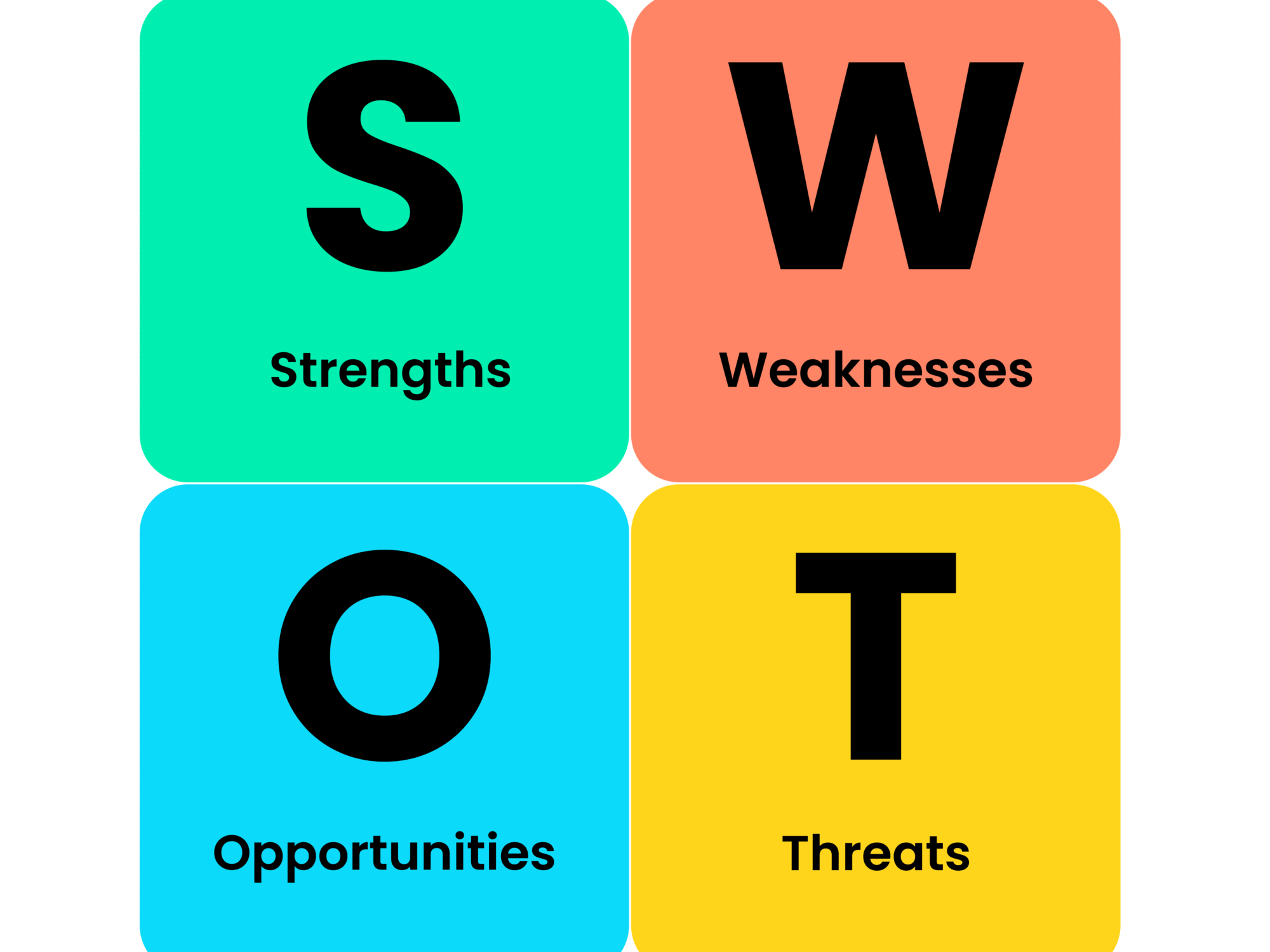
A SWOT analysis is a framework for identifying an organization, business or brand’s strengths, weaknesses, opportunities and threats, both overall and in specific areas.
University of Missouri Libraries (2025) explains…
Strengths are part of the organization or business that are advantageous
Weaknesses are the parts of an organization that put them at a disadvantage
Opportunities are internal or external factors that can improve the organization
Threats are internal or external influencing factors that can cause problems for the organization
What’s the purpose of a SWOT?
SWOT analyses are typically conducted in the context of a strategic plan. They help organizations and businesses make sense of characteristics and factors that affect their business positively and negatively. SWOT analyses are often conducted during strategic planning to help organizations decide how to approach specific issues or goals. In a professional communications setting, specifically, a SWOT analysis may be conducted to address needs related to a new campaign, a company rebrand, or an annual communications plan.
SWOT analysis can be conducted based on an established goal, or it can be used to help establish a goal for a strategic plan. However, a central part of SWOT analysis in any context is that it is research-informed, meaning it draws on quantitative and qualitative data from the organization and supporting sources to support each strength, weakness, opportunity and threat. A SWOT analysis would not be useful for successfully following a strategic plan if it is uninformed by past insights. Research is an essential part of SWOT analysis, and SWOT analysis is a tool used to understand and make use of research.
SWOT in the context of social media
As I mentioned, I’ve used the SWOT analysis framework in my higher education and professional careers, especially in social media work. Like most business strategies, social media strategy requires research and insights to understand the full scope of an organization or goal at hand. Once the research is complete and sufficient information has been gathered, an informed SWOT analysis can be conducted. Without research to back up these claims made in the SWOT analysis, the strategic plan is not informed.
The SWOT analysis conceptualizes the wins and drawbacks businesses face and organizes the overarching factors that impact future plans and ideas. Social media for strategic communication, Freberg (2025) suggests a fifth part of the SWOT analysis called “strategic implications”. Strategic implications are statements that synthesize the findings of the SWOT analysis to make applicable strategic suggestions for the decision at hand. In other words, strategic implications make sense of the research-based, SWOT findings so they can be used to inform sound strategies.
I will always be thankful for learning and practicing this invaluable skill at a relatively young age, and I can appreciate how understanding it will help in my future career.
What are your experiences with SWOT analyses in a professional setting?
References
Freberg, K. (2025). Social media for strategic communication: Creative strategies and research-based applications (3rd ed.). Thousand Oaks, CA: Sage Publications
University of Missouri Libraries. (2025, June 6). SWOT analysis. In Journalism – strategic communication. https://libraryguides.missouri.edu/c.php?g=28374&p=2653035