

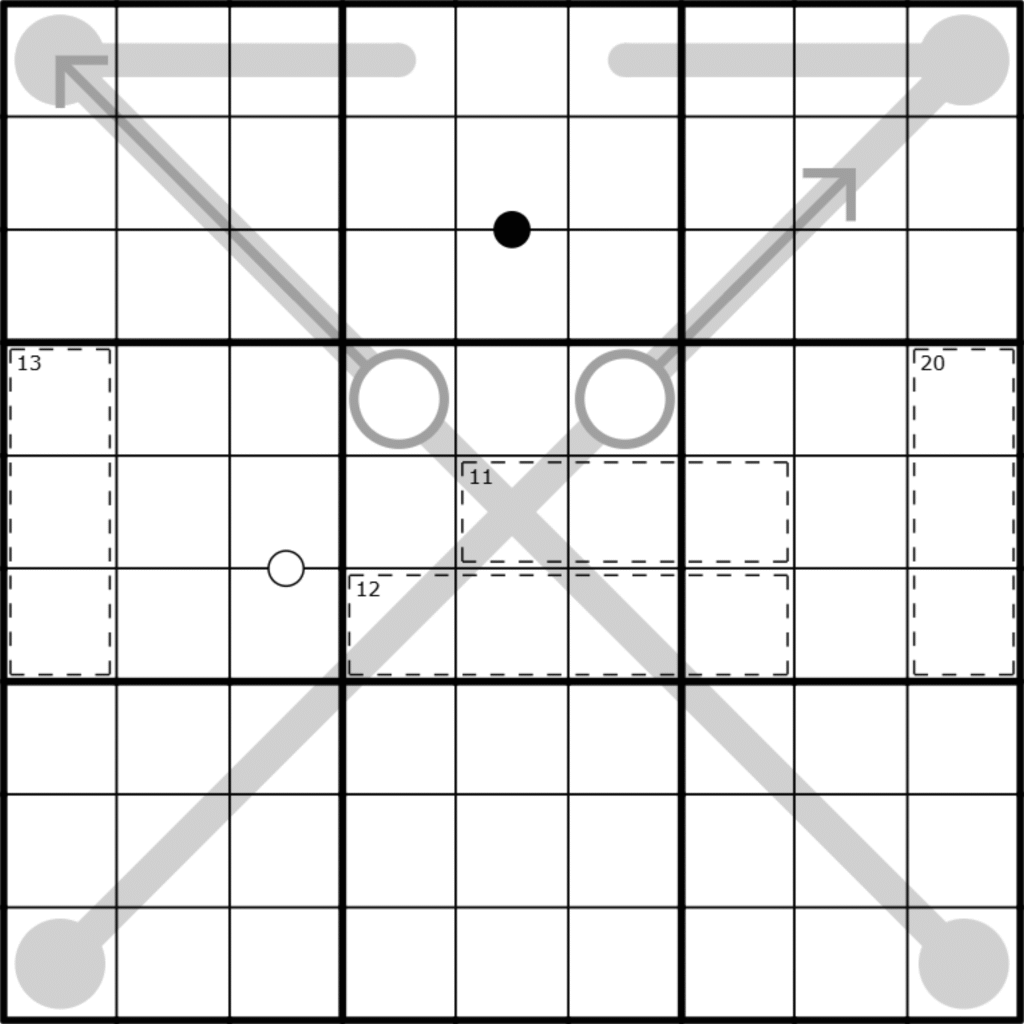
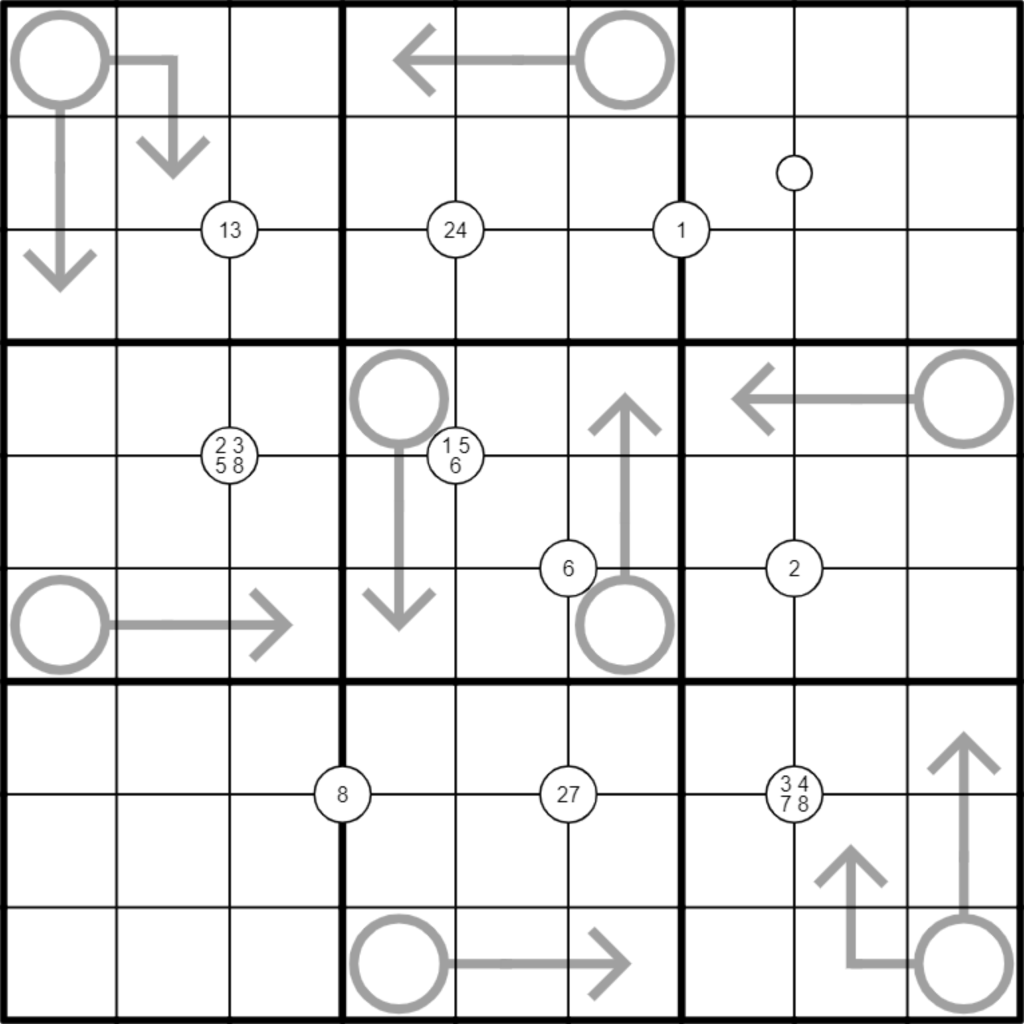
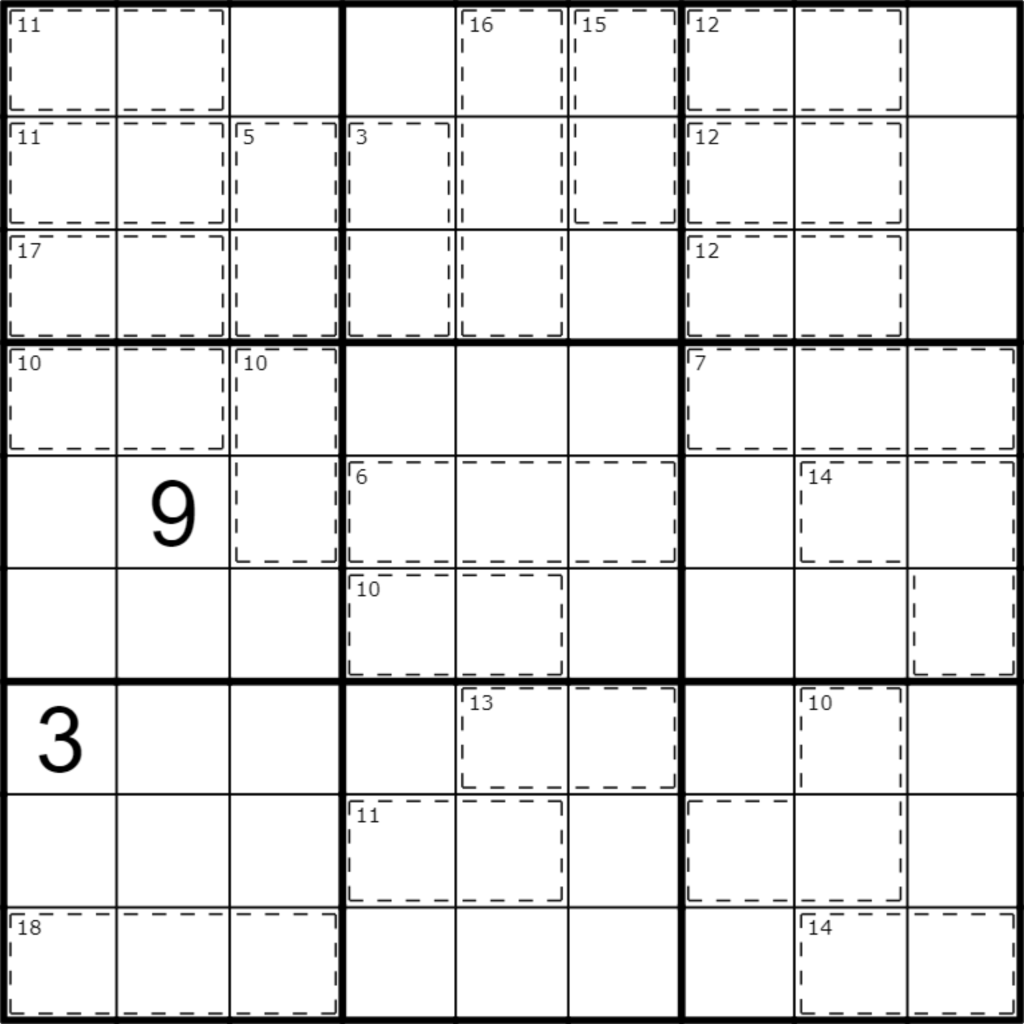
10’s and 18’s:
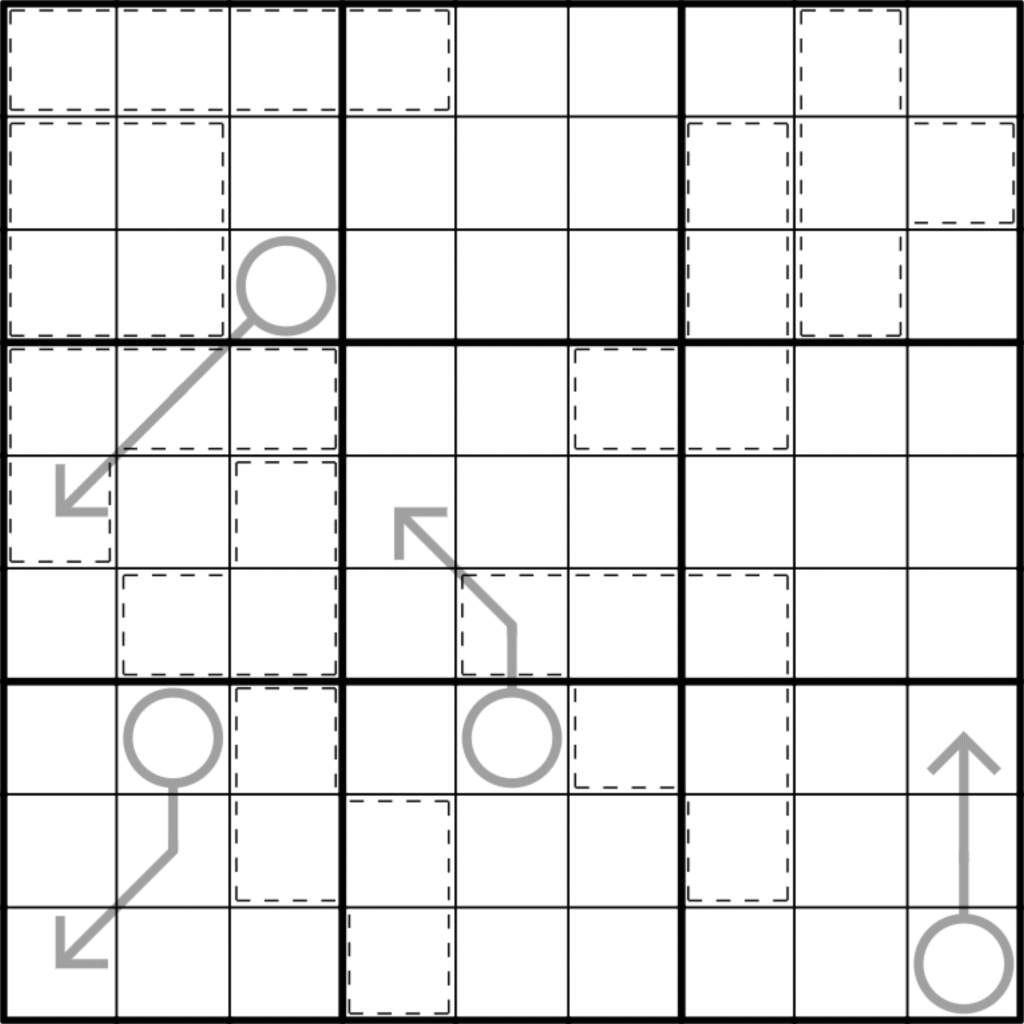
Normal Sudoku rules apply.
Digits in a cage must sum to either 10 or 18. Digits may repeat in a cage. An equal number of cages must sum to each total.
Digits along an arrow must sum to the number in the circled cell. The sum of each arrow clue is either 10 or 18.
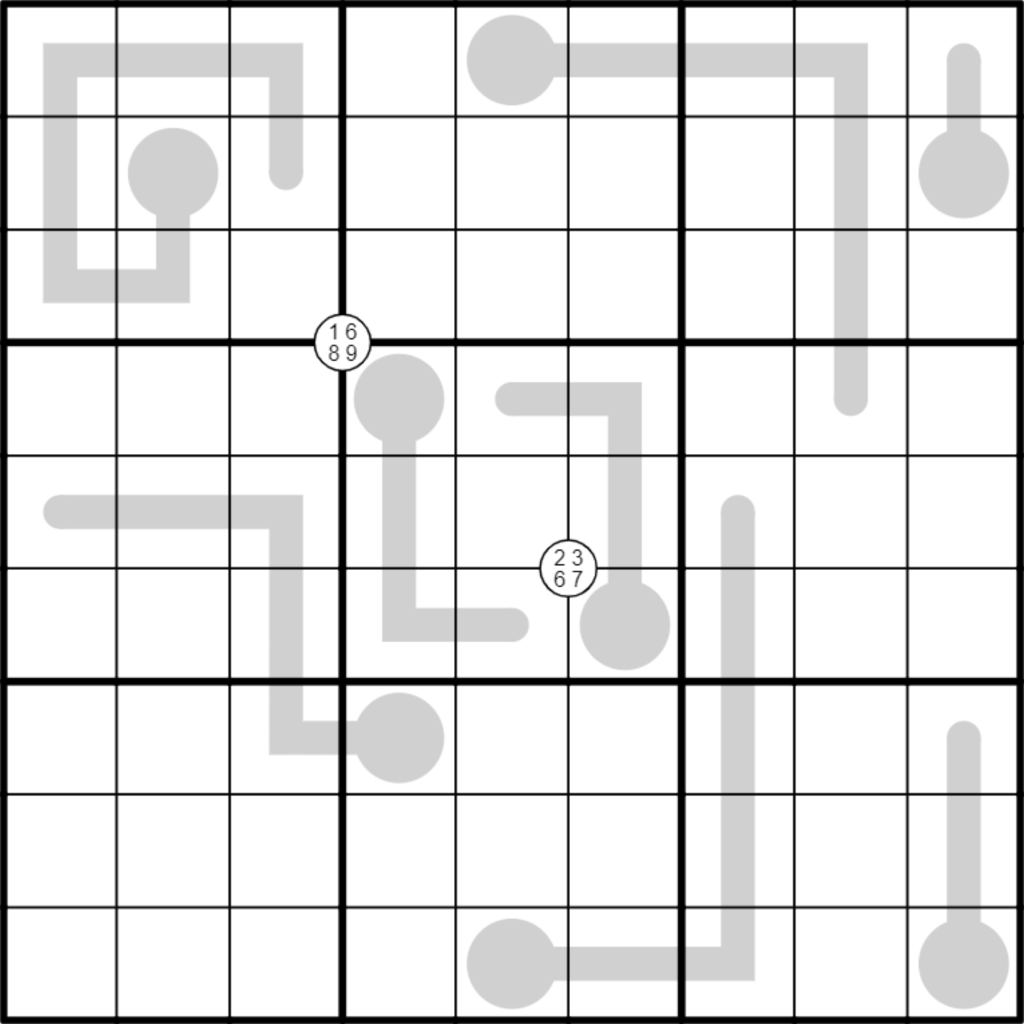
Odds and E(ve)n[d]s:
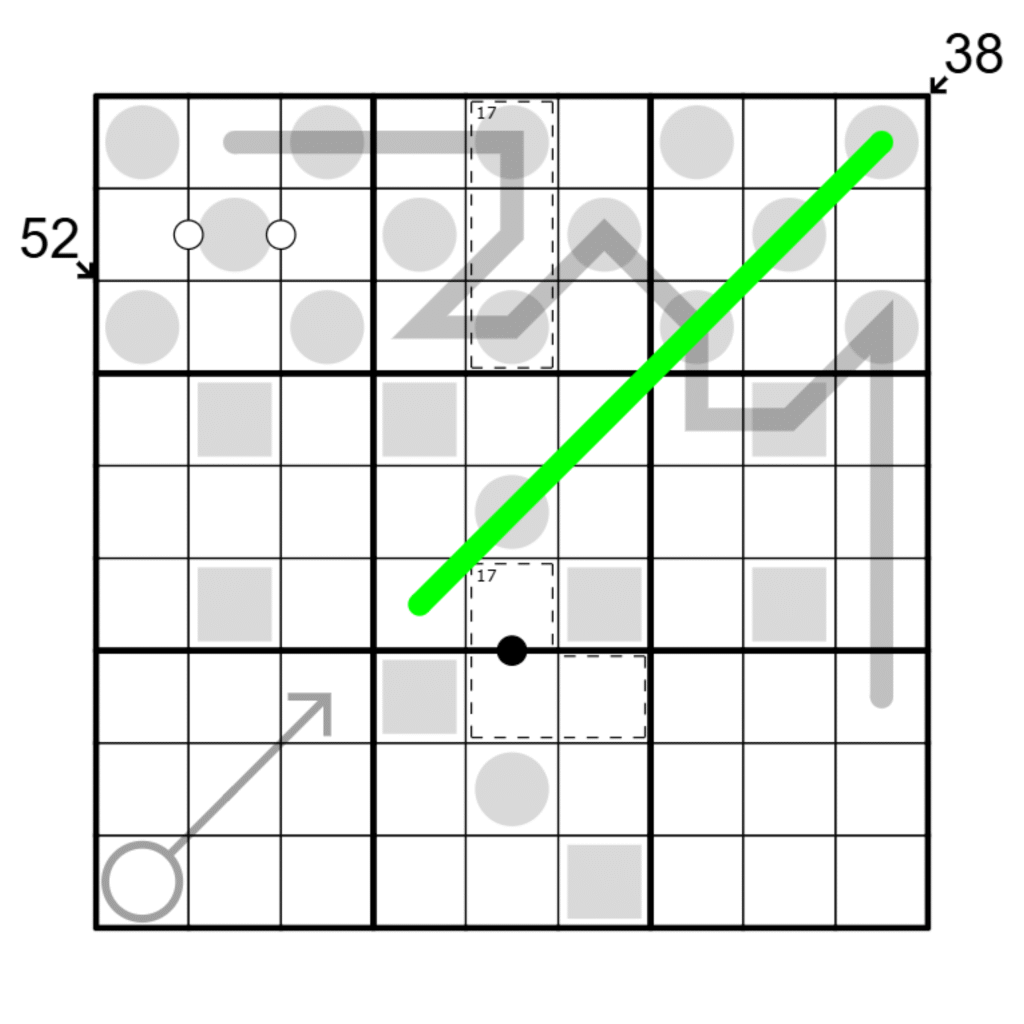
Normal Sudoku rules apply.
Digits along the gray line must form a palindrome.
Cells marked with a gray circle are odd.
Cells marked with a gray square are even.
Cells separated by a white dot must contain consecutive digits.
Cells separated by a black dot must contain digits in a 2:1 ratio.
Consecutive digits along the green line must differ by at least 5.
Digits along an arrow must sum to the number in the circled cell.
Digits in a cage cannot repeat and must sum to the total in the top left corner.
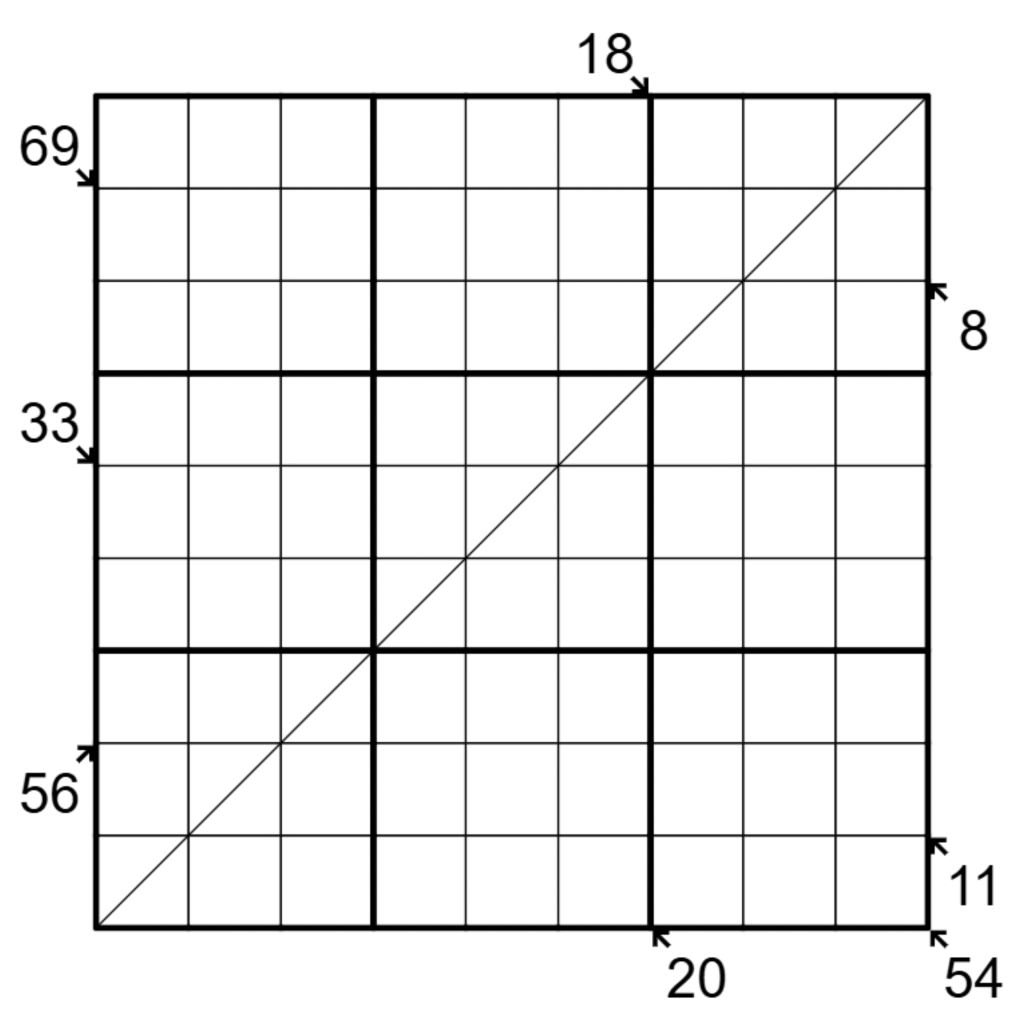
Numbered clues outside of the grid correspond to the sum of the digits along the indicated diagonal.
Prime Time Player:
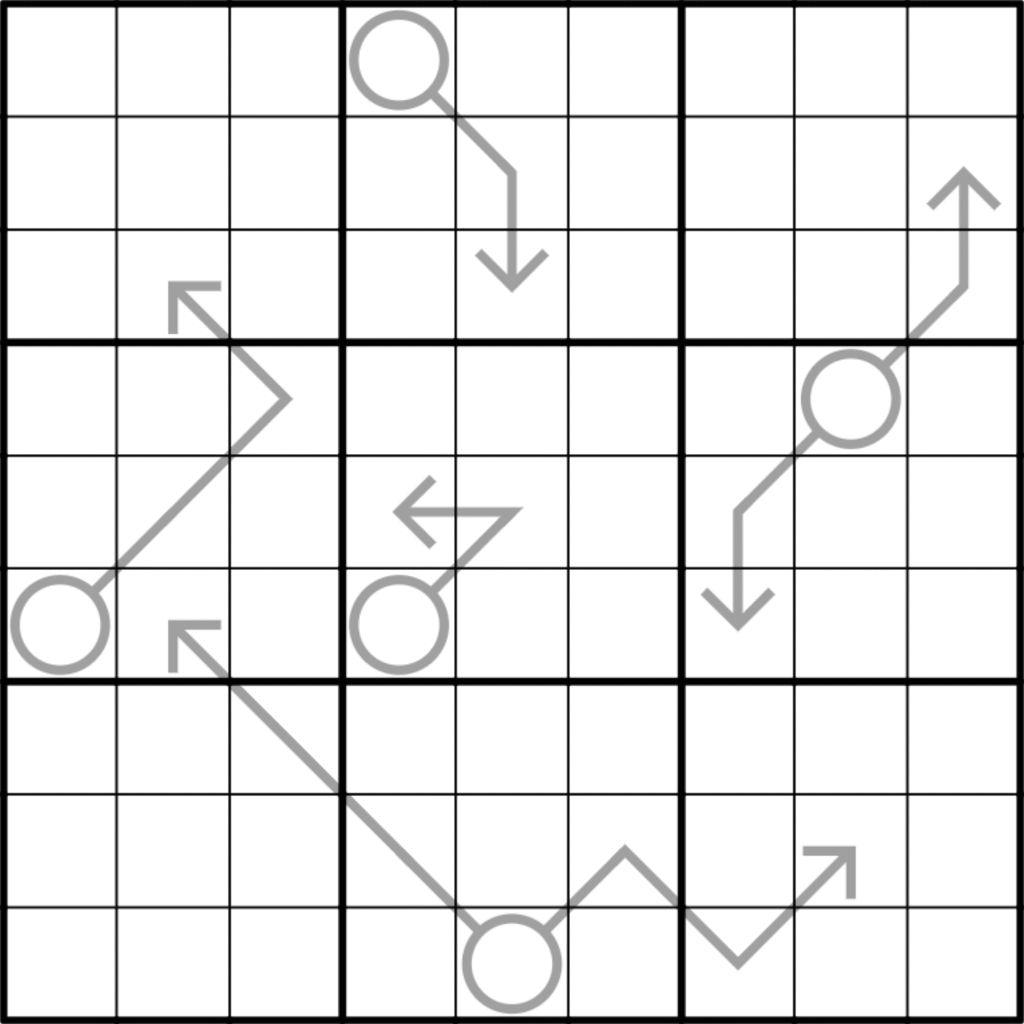
Normal Sudoku rules apply.
Digits along an arrow must sum to the digit in the circled cell.
If a box’s number is prime, then the set of prime digits must be contained in the prime numbered cells of the box. The boxes and the cells within each box are numbered in the conventional way, i.e. from left to right and top to bottom.
If a box’s number can be expressed as a product of primes (not necessarily distinct), then the set of all possible powers and products of powers of these primes must be contained in the similarly numbered cells of that box. For example, 4 can be expressed as 2×2 where 2 is prime, so in box 4 the set of digits corresponding to the powers of 2, {2,4,8}, must go in cells 2, 4, and 8 in some order.
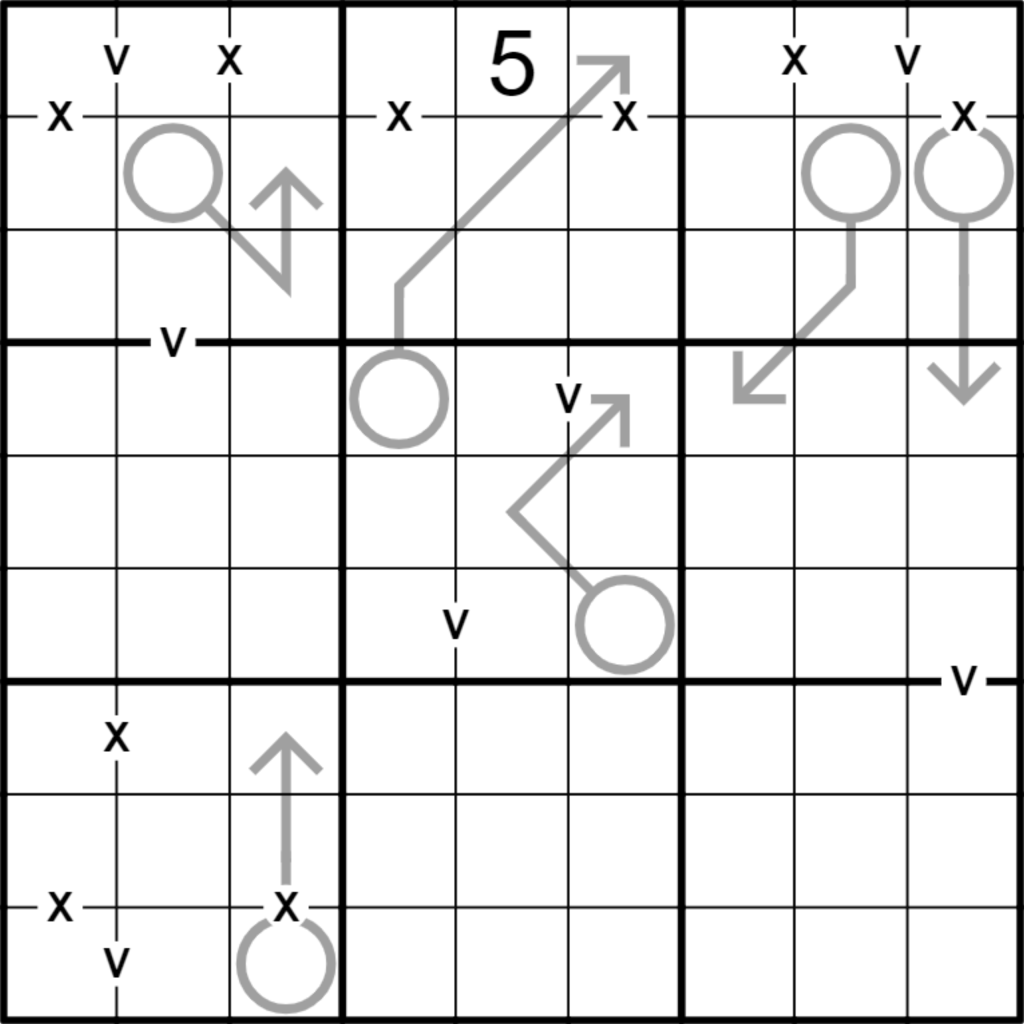
Untitled #XV:
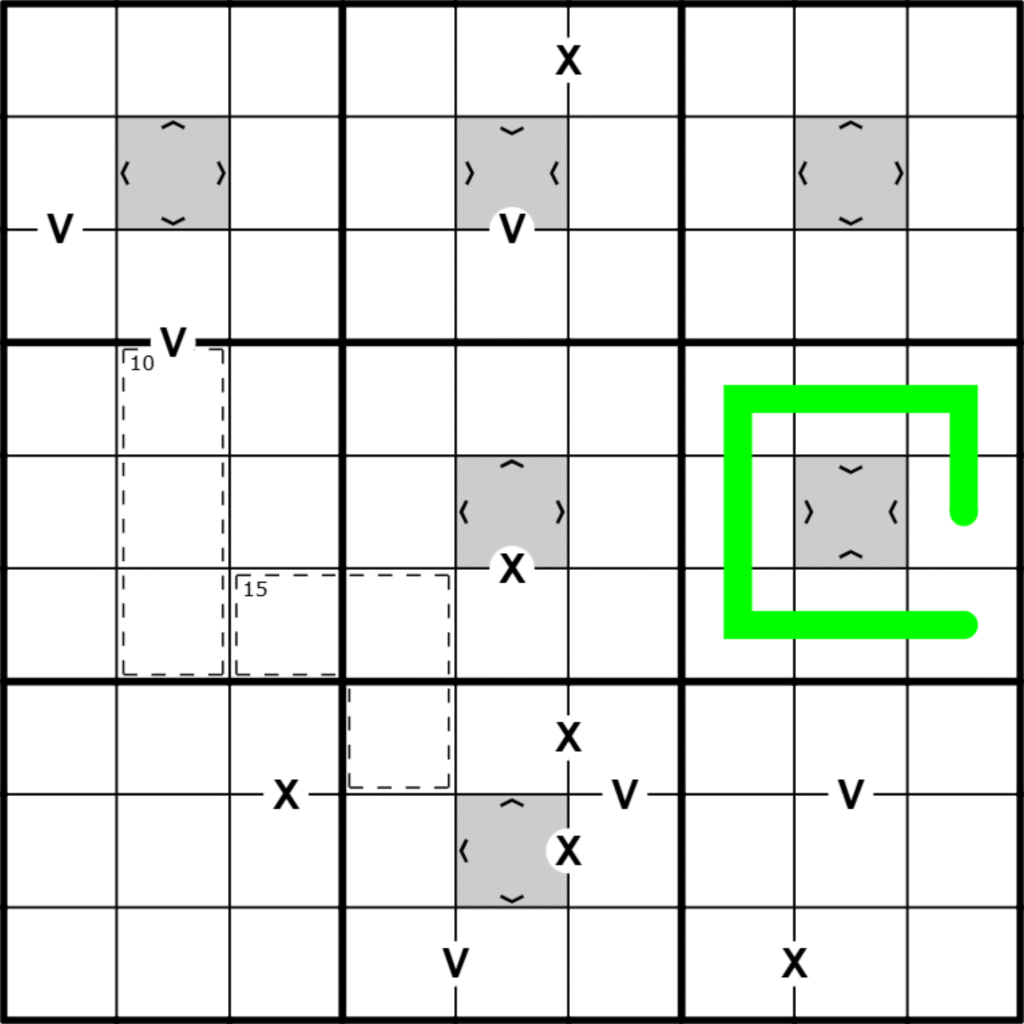
Normal Sudoku rules apply.
Cells separated by a “V” must sum to 5.
Cells separated by an “X” must sum to 10.
Consecutive digits along a green line must differ by at least 5.
Cells with arrows facing inward must contain a smaller digit than in all orthogonal cells.
Cells with arrows facing outward must contain a larger digit than in all orthogonal cells.
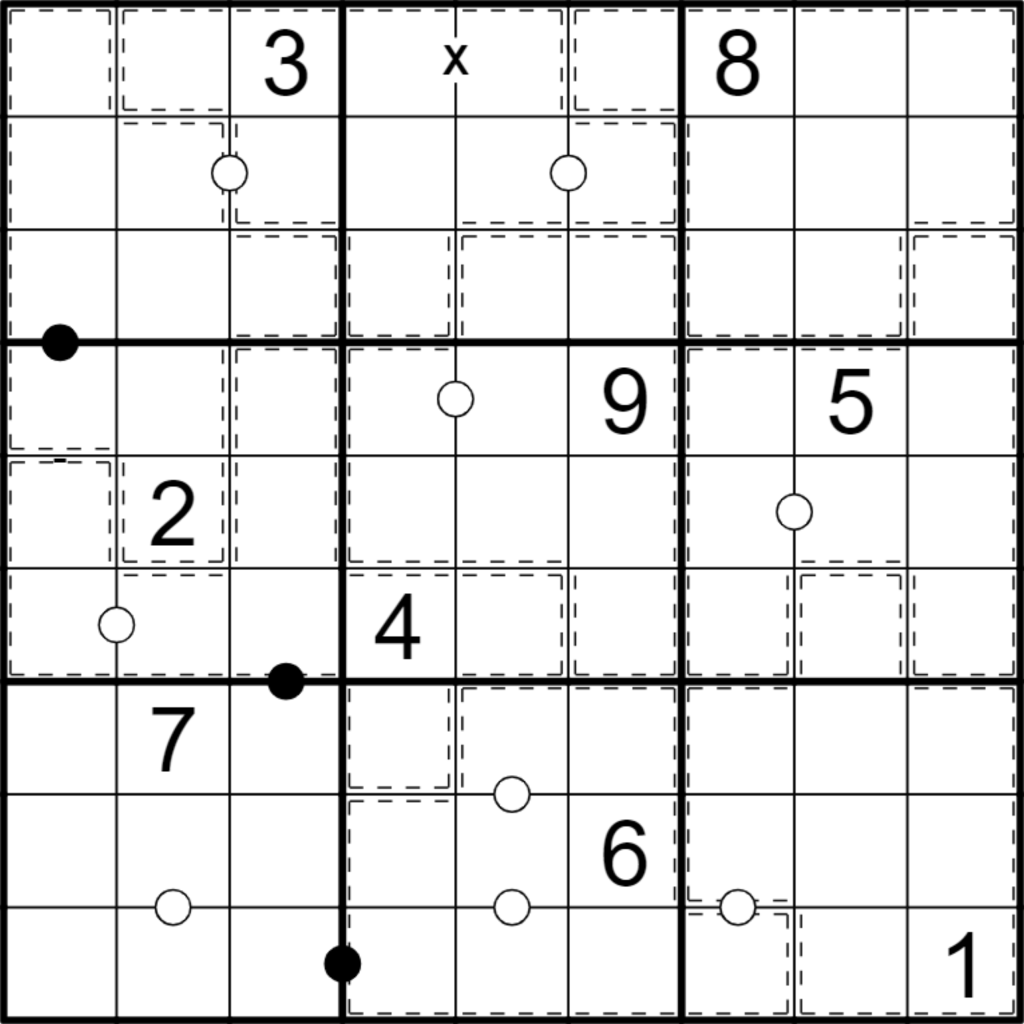
Untitled #1
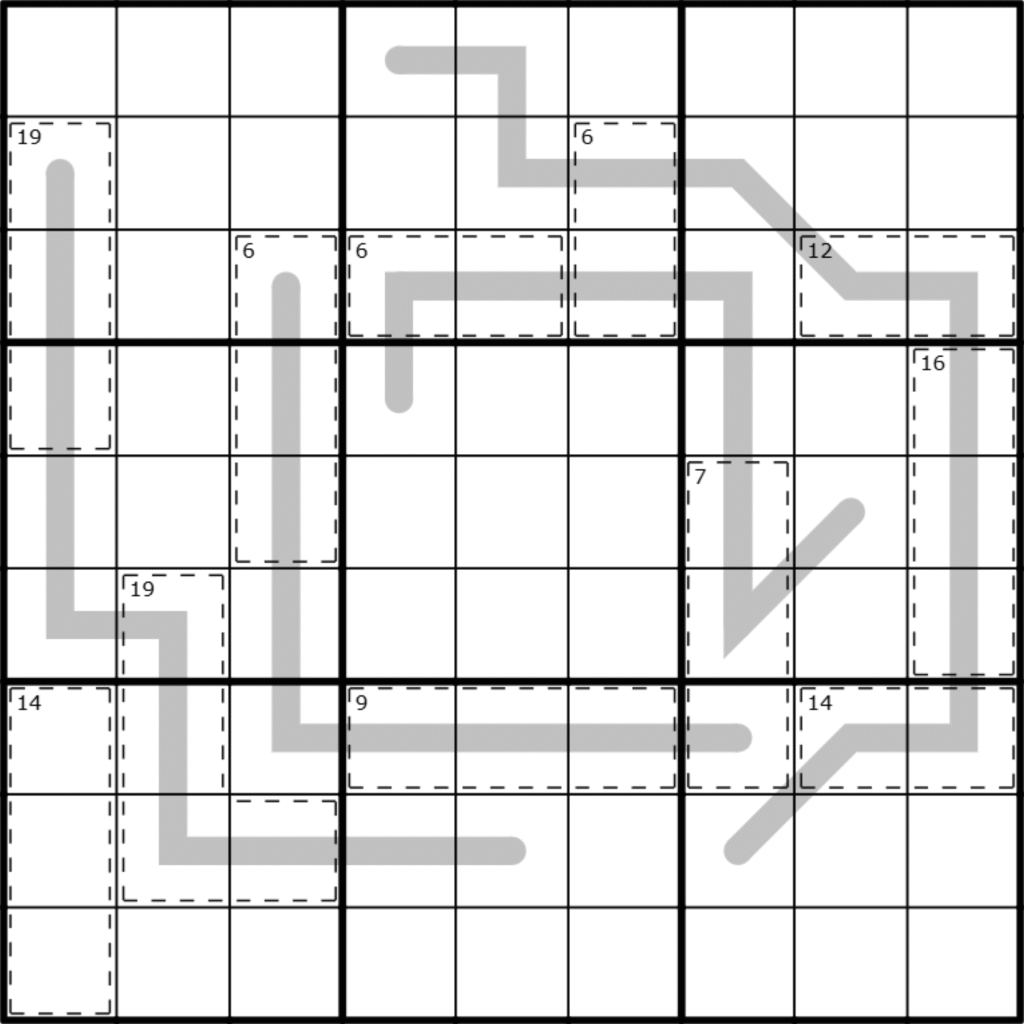
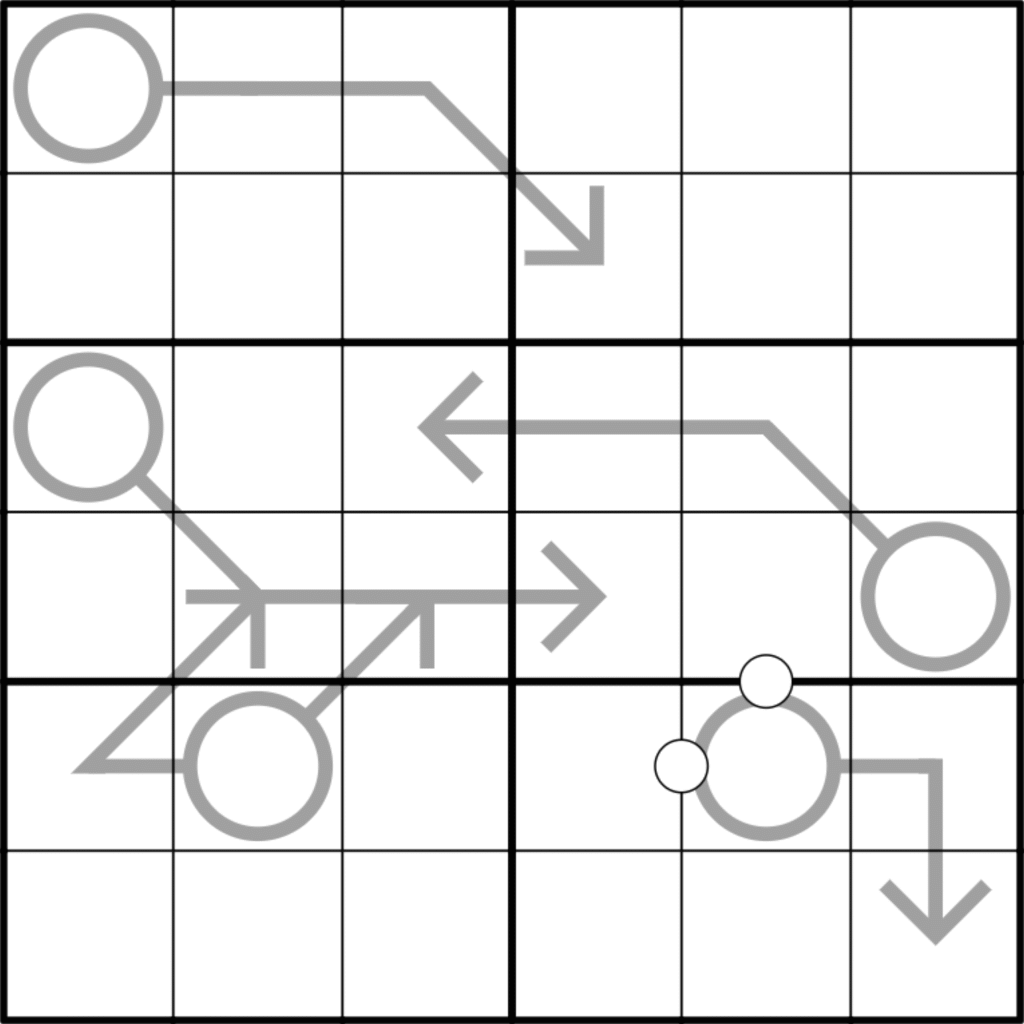
Normal Sudoku Rules apply.
Digits in a cage must sum to the total in the top left corner.
Digits along a thermometer must increase from the bulb end but need not be consecutive. The four thermometers along the diagonals all terminate at the center cell.
Digits along an arrow must sum to the digit in the circled cell.
Cells separated by a white dot must contain consecutive digits.
Cells separated by a black dot must contain digits in a 2:1 ratio.

Regularly Irregular
Normal sudoku rules apply.
Digits in a cage cannot repeat.
Cells separated by a white dot must contain consecutive digits.
Cells separated by a black dot must contain digits in a 2:1 ratio.
Cells separated by an “X” must contain digits that sum to 10.
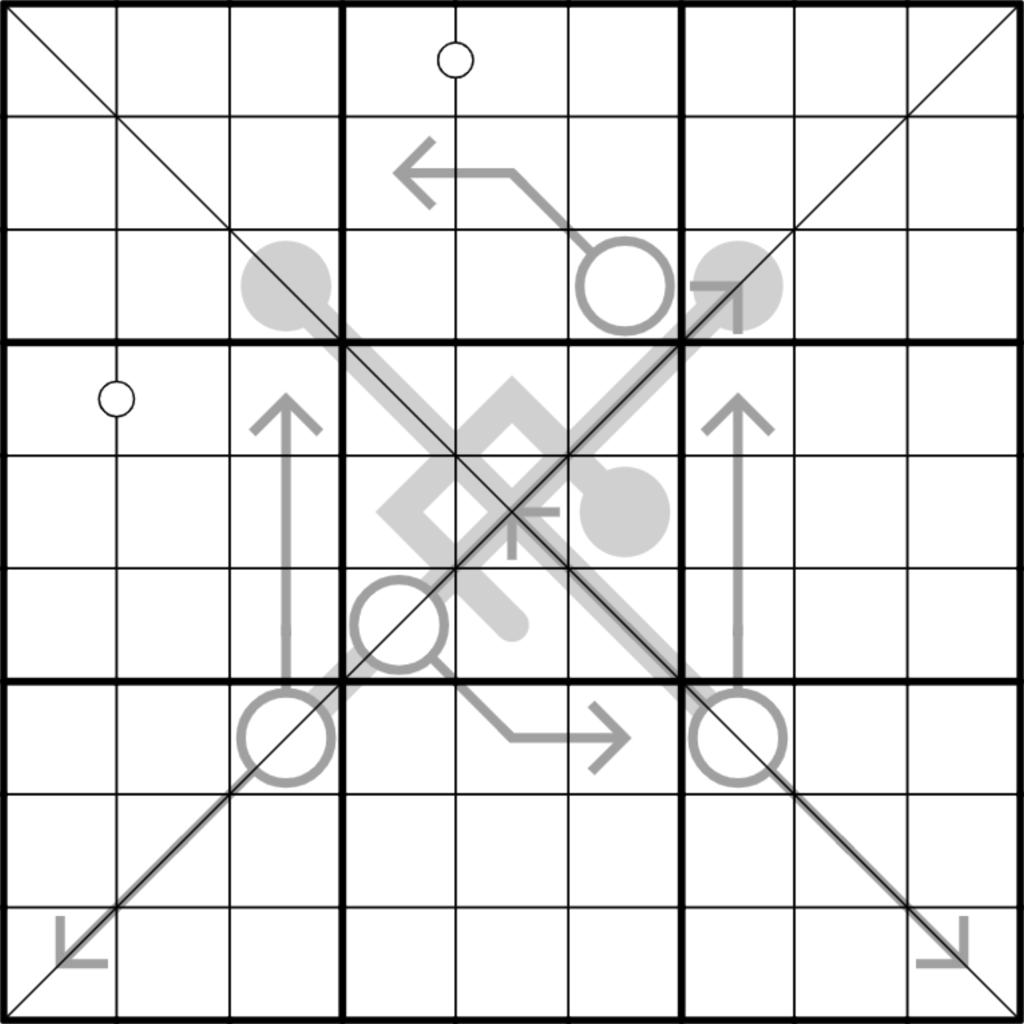
Inner Tension
Normal sudoku rules apply.
Digits cannot repeat on either main diagonal.
Digits along a thermometer must increase from the bulb end, but need not be consecutive.
Digits along an arrow must sum to the digit in the circled cell.
Cells separated by a white dot must contain consecutive digits.
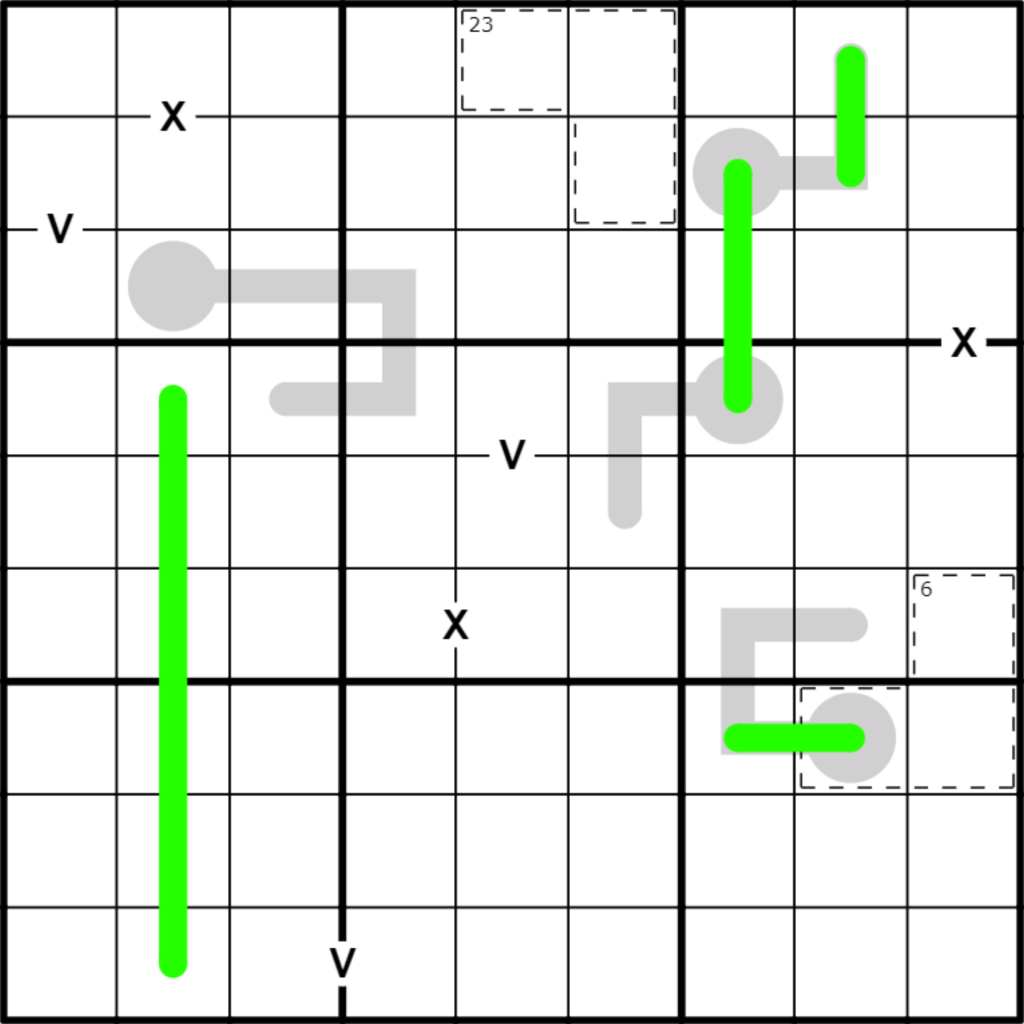
High Floor, Low Second Floor
Normal sudoku rules apply.
Cells separated by a V must contain digits that sum to 5. Cells separated by an X must contain digits that sum to 10.
Digits along a thermometer must increase from the bulb to the tip. Consecutive digits along a green line must differ by at least 5.
Digits in a cage must not repeat and must sum to the total given in the top-left corner.
Turning Up the Heat
Normal Sudoku rules apply.
Digits must increase along a thermometer; they do not need to be consecutive digits.
A circle containing four digits at the center of a 2×2 block indicates the digits that must go in the surrounding cells in some order.
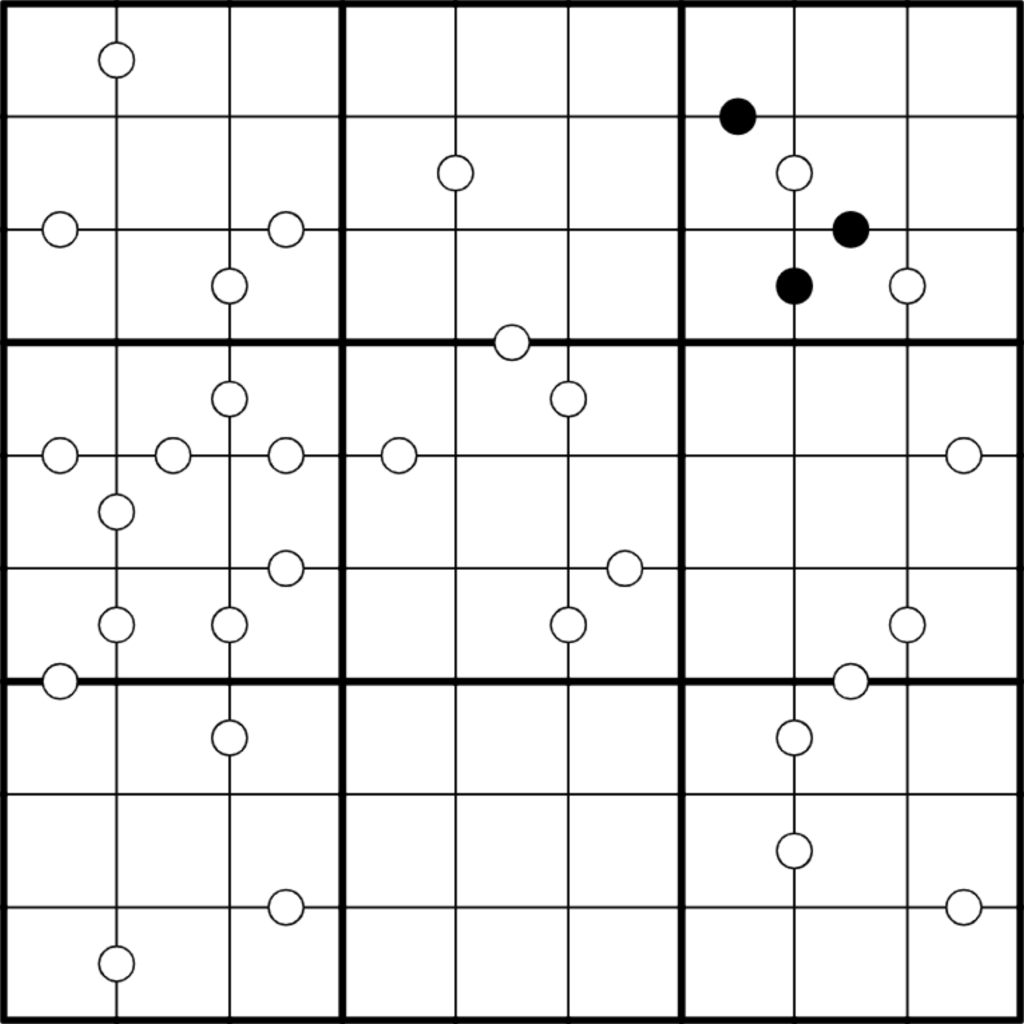
Sudoku in Black and White
Normal Sudoku rules apply.
Cells separated by a white dot must contain consecutive digits. All possible white dots have been included!
Cells separated by a black dot must contain digits that form a 2:1 ratio. NOT all possible black dots have been included!
Sandwiched Between
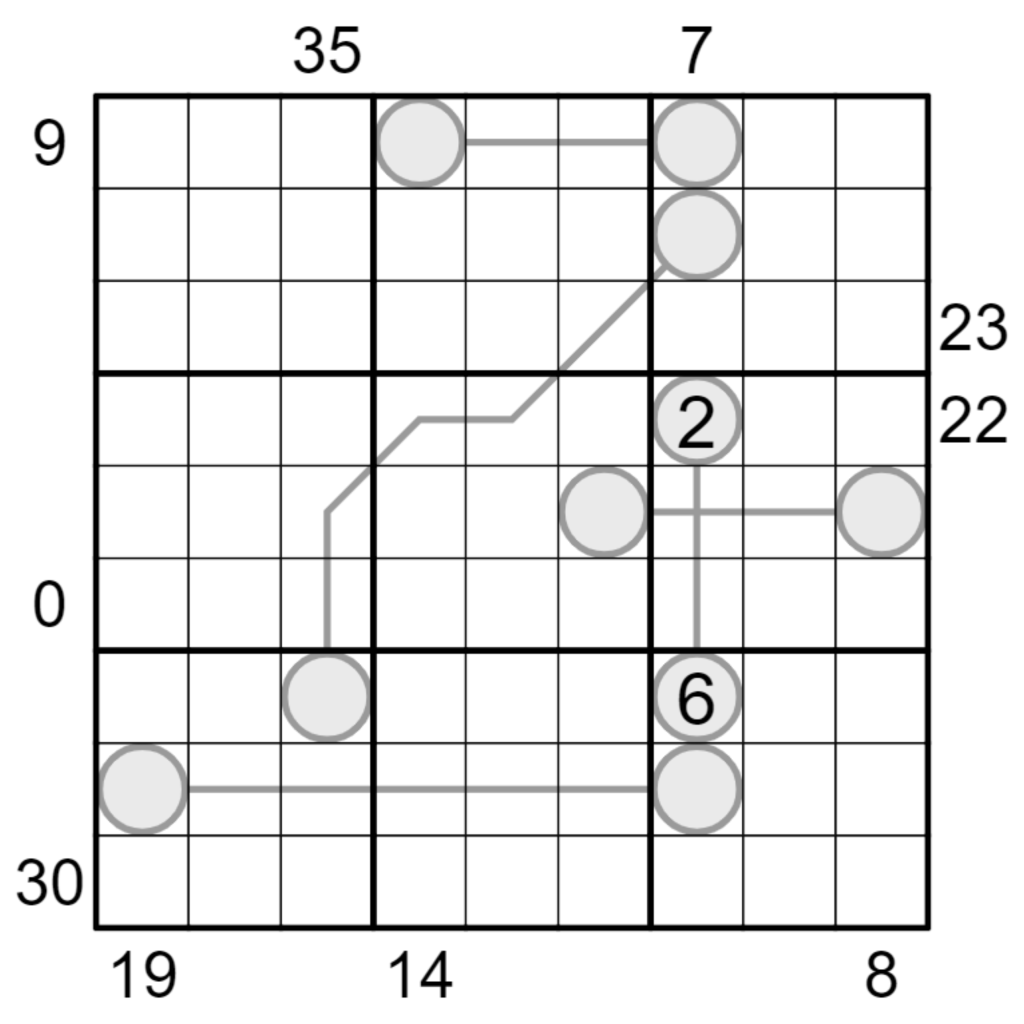
Normal Sudoku rules apply.
A number lying outside of a row/column indicates the sum of the digits that lie between 1 and 9’s position in that row/column.
The digits along each “between” line must lie strictly between the digits in the circled ends.
Sudokuality
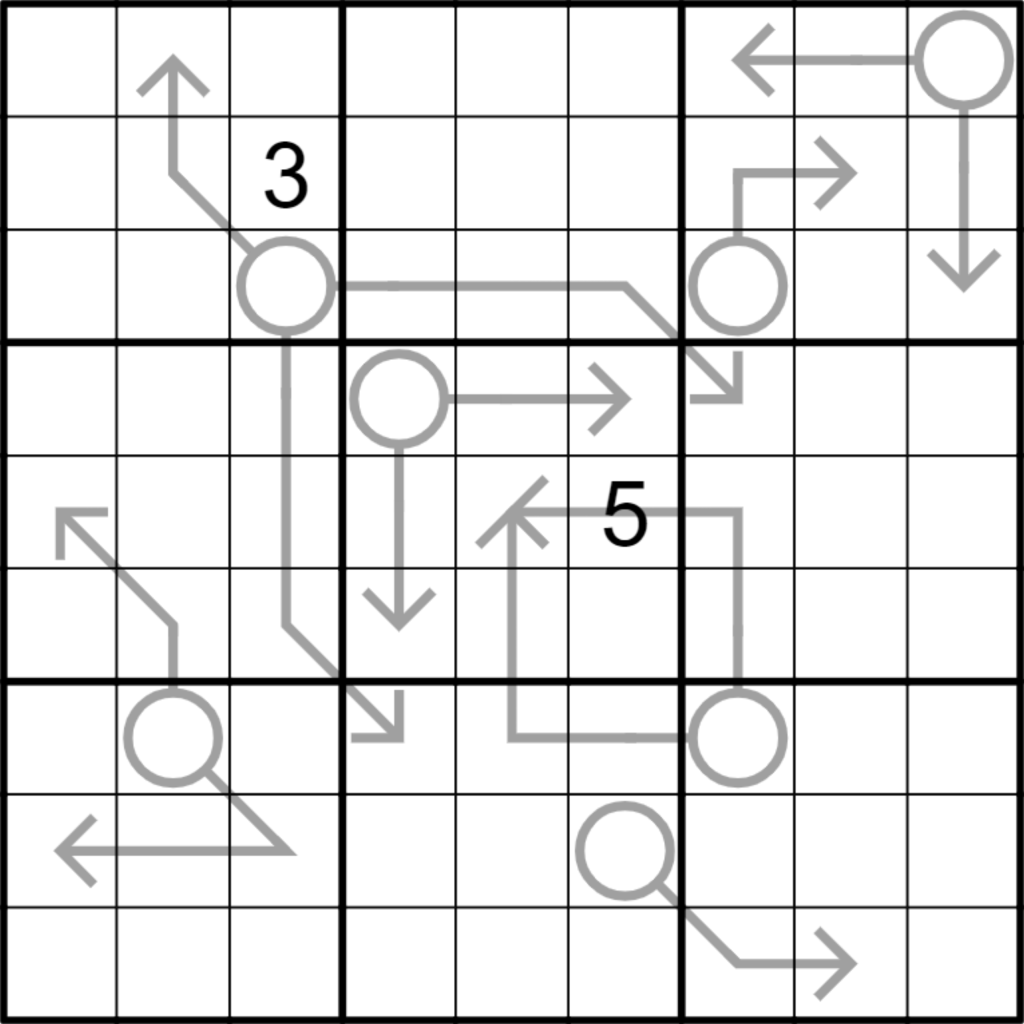
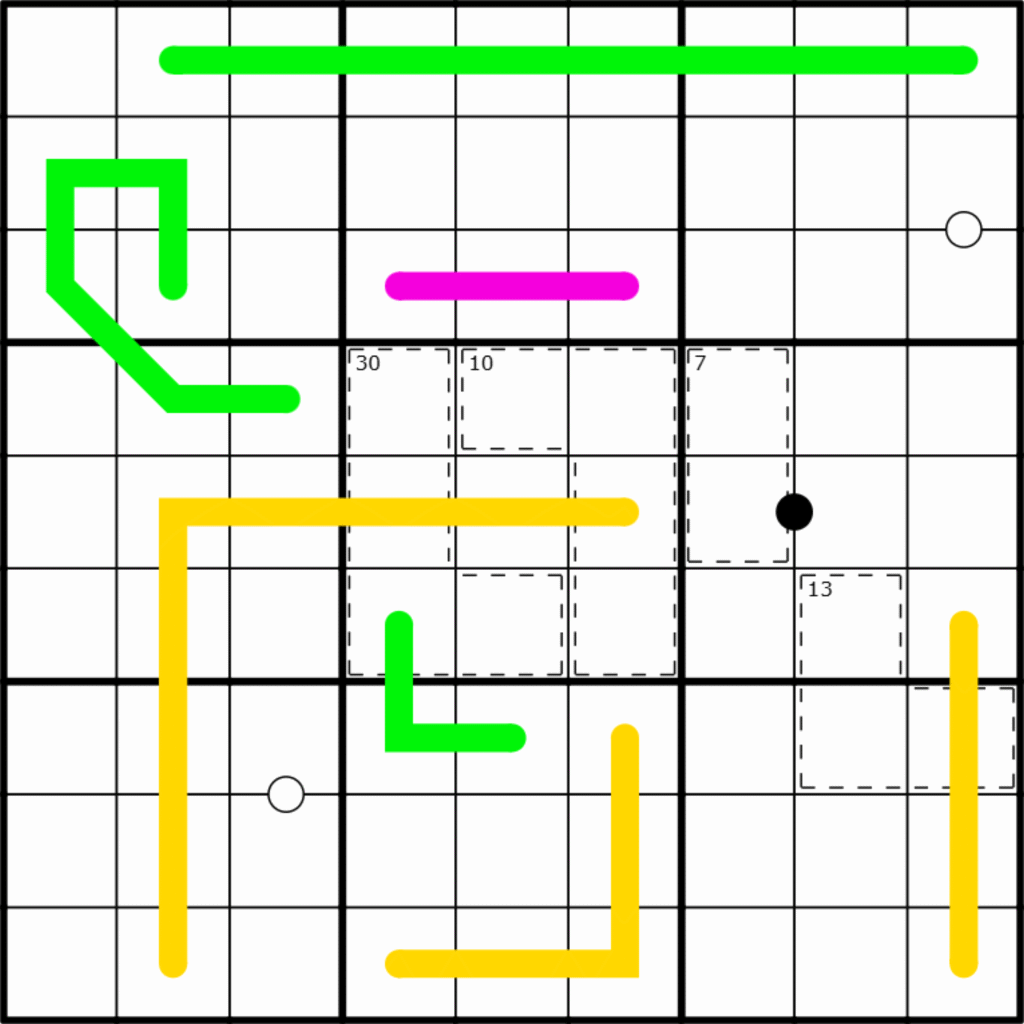
Normal Sudoku rules apply.
Digits in a cage may not repeat and must sum to the total in the upper-left corner of the cage.
Digits separated by a black dot have a 2 to 1 ratio. Digits separated by a white dot are consecutive. Not all dots are given.
Green lines are standard German whispers lines, i.e. consecutive digits must differ by at least 5.
Purple lines are standard Renban lines, i.e. the digits appearing on such a line must correspond to a set of consecutive digits with no repeats.
Gold lines are standard “Nabner” lines where no pairs of consecutive digits can appear, e.g. a 2 and a 3 cannot lie on the same gold line. Digits may repeat on a gold line if allowed by the other rules.
Mixed Magic
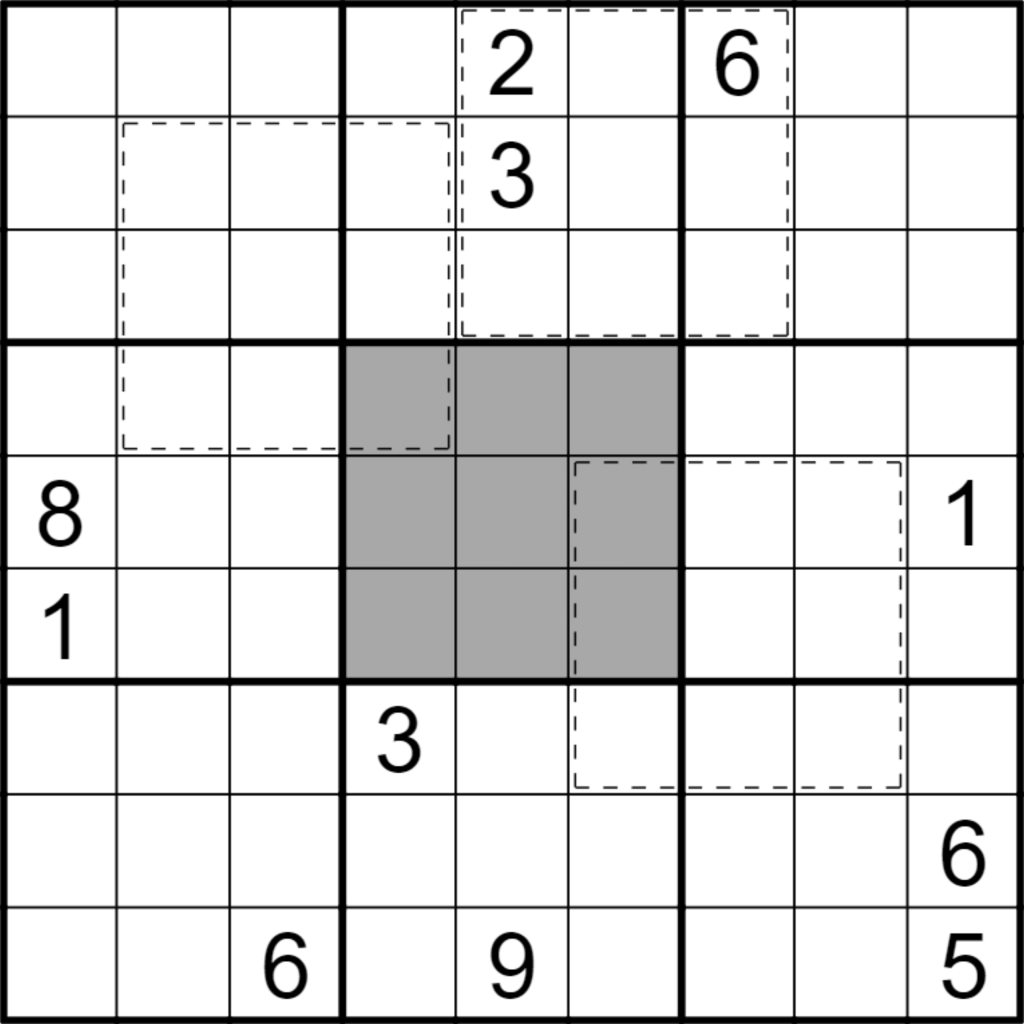
Normal Sudoku rules apply.
The central row, central column, and two main diagonals must sum to the same total in the central box (shaded in gray).
In the 3×3 regions enclosed by dashed lines, the outer rows and columns must sum to the same total. Digits in these 3×3 regions may repeat.
Bullseye Sudoku
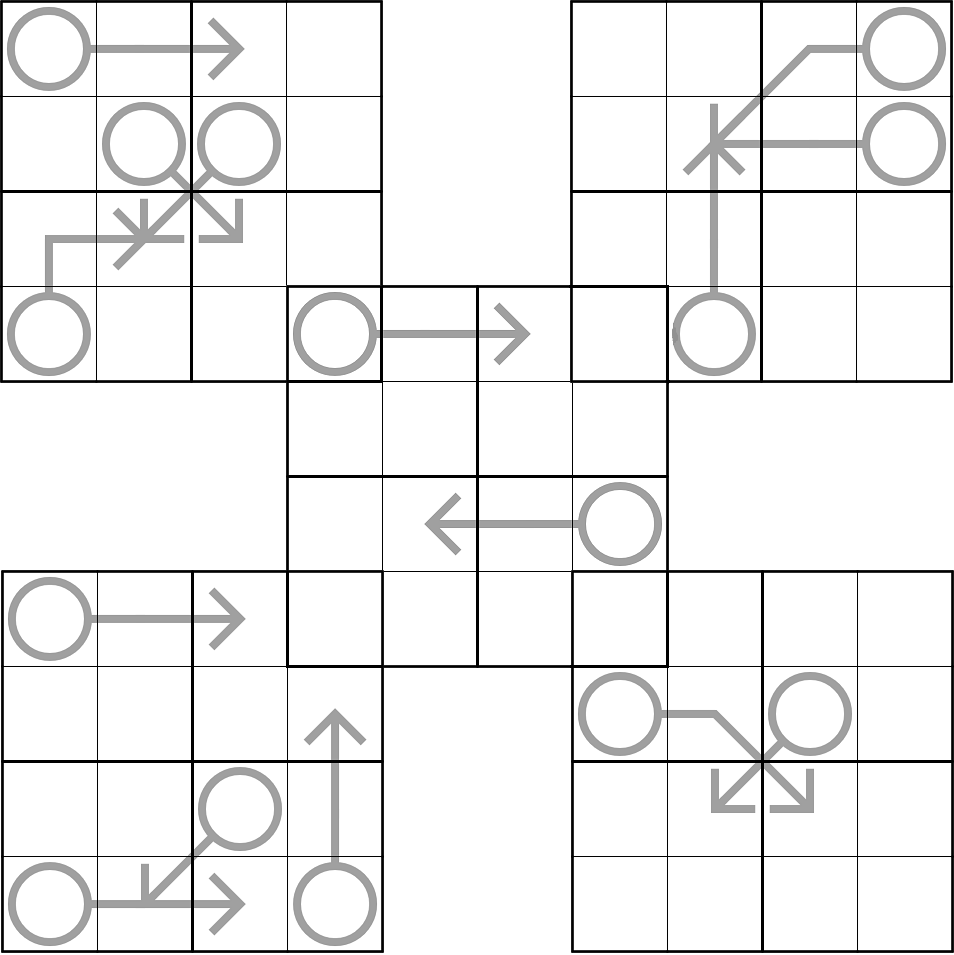
This puzzle consists of five 4×4 sudokus: one central 4×4 sudoku that is joined to an additional 4×4 sudoku at each of its four corner cells.
In each 4×4 sudoku, every row, column, and 2×2 region must contain the digits 1-4 with no repeats.
Digits along an arrow must sum to the digit in the corresponding circled cell.
No playable link. 🙁